
Elite K9 Training: Debunking Myths About High-Level Canine Discipline
True working discipline has nothing to do with fear, pain, or heavy-handed force. Many handlers assume elite k9 training demands harsh physical dominance, yet authentic operational success relies entirely on timing, emotional regulation, and clear communication. If you feel frustrated watching your dog execute perfect sits in a quiet facility only to melt down on an Oklahoma City sidewalk, you aren't alone. It's exhausting when basic obedience crumbles under real-world pressure, leaving you stranded between chaotic reactivity and contradictory advice.
You don't need to choose between permissive chaos and punitive handling to achieve dependable reliability. In this guide, you'll discover the real science behind high-level working methodologies, separating tactical impulse control from destructive industry misconceptions. We examine how structured drive channeling, environmental neutrality, and balanced communication transform unpredictable reactivity into calm, mission-ready focus.
Table of Contents
Defining Elite K9 Training: Moving Beyond Industry Buzzwords
Myth 1: Does High-Level Training Require Harsh Punitive Methods?
Myth 2: Are Elite Standards Reserved Only for Working Breeds?
The Anatomy of True Discipline: Drive Control and Neutrality
Evaluating Advanced K9 Programs: Choosing Legitimate Training
Defining Elite K9 Training: Moving Beyond Industry Buzzwords
Franchise dog training companies often slap the word "elite" onto basic obedience packages as a marketing gimmick. In reality, authentic elite k9 training represents a strict operational benchmark: immediate command execution under extreme real-world stress. True working discipline never means robotic suppression or forcing a dog into nervous compliance. Military and police working dogs prove every day that functional precision begins with environmental neutrality rather than raw aggression. A dog that lunges, barks, or loses focus when another animal passes by is not displaying protection; it is displaying a lack of control. Clear communication bridges the gap between simple pet manners and genuine real-world reliability.
The Core Principles of High-Drive Conditioning
High-drive dogs require structured mental outlets. Engagement conditioning teaches the dog to value the handler above any environmental distraction, turning handler focus into the ultimate reward. Grounded in the scientific principles of dog training, precise marker systems remove ambiguity during rapid tactical transitions and command cues. Handlers apply fair pressure-and-release mechanics to cultivate problem-solving resilience, teaching the animal to think through challenges without triggering psychological panic or defensive shutdown.
How Working Standards Differ from Basic Obedience
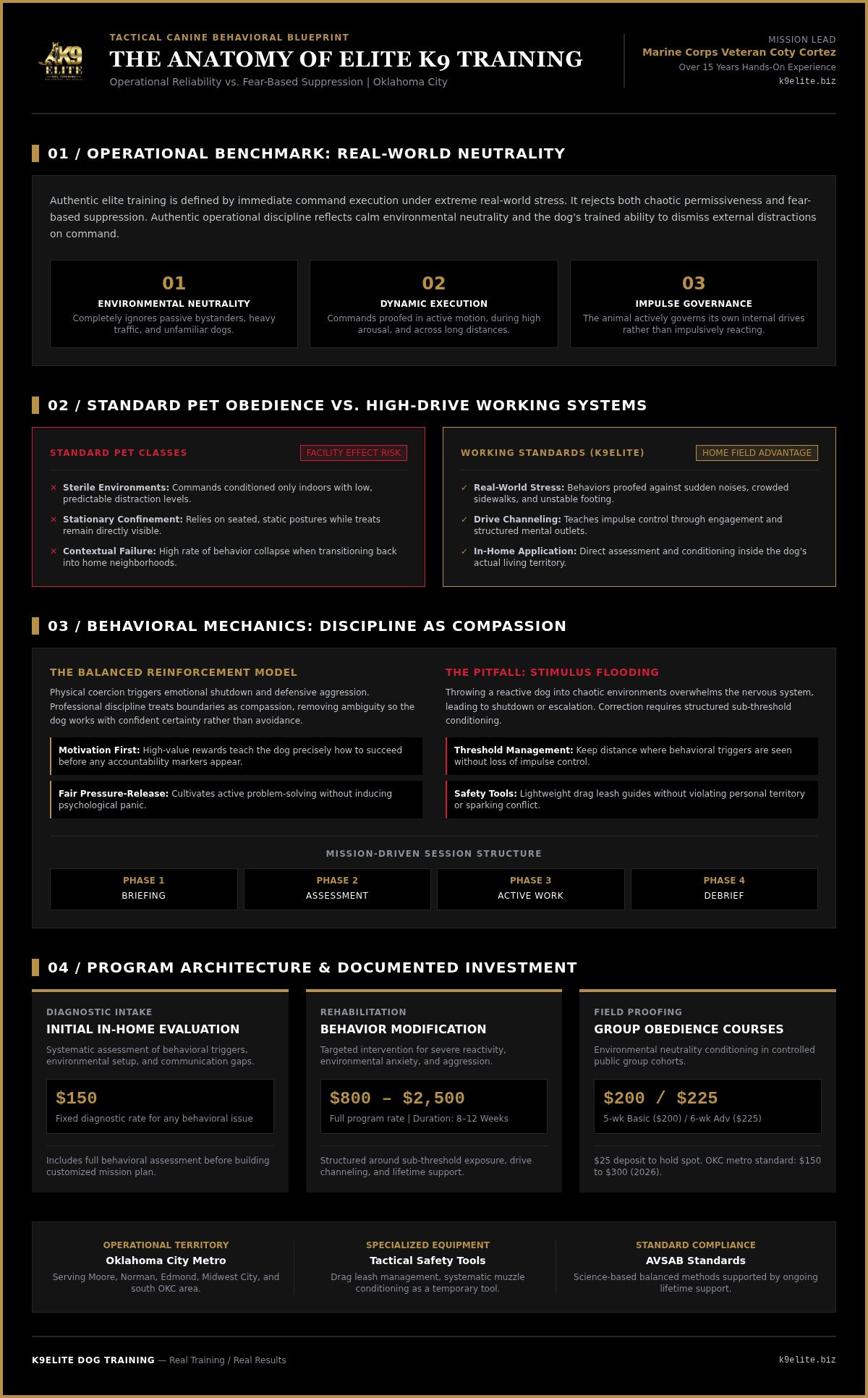
Standard pet classes focus on stationary positions inside sterile, low-distraction environments. The dog learns to sit quietly when food is visible and the room is calm, but the behavior disintegrates on a busy street corner. Working systems proof behaviors against sudden loud noises, crowded sidewalks, and unfamiliar footing.
Environmental Neutrality: The animal ignores passive bystanders, traffic, and strange dogs completely.
Dynamic Execution: Commands are proofed in motion, during high arousal, and at significant distances.
Impulse Governance: The dog controls its own biological drives instead of reacting impulsively to motion.
Exploring how master dog obedience OKC establishes foundational field control shows that real reliability happens through deliberate exposure. High-level conditioning prepares the team to operate as a cohesive unit in any public environment, turning unpredictable chaotic reactivity into rock-solid composure.
Myth 1: Does High-Level Training Require Harsh Punitive Methods?
One of the most damaging misconceptions in modern canine education is the belief that elite k9 training depends on pain, heavy corrections, or physical intimidation. Heavy-handed coercion does not produce a stable working animal. Excessive physical pressure induces emotional shutdown, which destroys genuine operational drive and sparks defensive aggression. Professional trainers view discipline as compassion because clear boundaries remove ambiguity, replacing canine anxiety with confident certainty. While avoidance-based regimens create nervous animals waiting to make a mistake, balanced conditioning cultivates dogs that actively want to work alongside their handlers.
Balanced Reinforcement versus Coercive Dominance
Fair boundaries provide predictable safety structures that confident working dogs respect. Trainers build drive and enthusiasm through high-value rewards first, showing the dog exactly how to win before ever introducing accountability markers. Balanced training pairs reward-based motivation with fair, timely boundaries to create unambiguous communication and dependable compliance without fear. As detailed in the Merck Veterinary Manual guide to behavior modification, systematic reinforcement paired with clear criteria forms the bedrock of long-term behavioral stability.
The Psychological Danger of Flooding
Amateur handlers often attempt to fix reactivity by throwing an anxious animal straight into chaotic environments. This training pitfall, known as flooding, overwhelms the nervous system with excessive stimuli, pushing the dog into fight-or-flight panic or learned helplessness. Controlled progress requires systematic, sub-threshold exposure:
Threshold Management: Keep the dog at a distance where it perceives behavioral triggers without losing impulse control.
Drive Channeling: Redirect instinctual arousal toward positive handler engagement before stress levels peak.
Humane Safety Tools: Employ a lightweight drag leash to guide the dog smoothly without violating its personal space or triggering conflict.
Elite performance comes from measured progression rather than brute physical force. If you struggle with unpredictable reactions on daily walks, partnering with experienced professionals at K9Elite helps you replace chaotic conflict with proven behavioral structure.
Myth 2: Are Elite Standards Reserved Only for Working Breeds?
High-level behavioral standards are not reserved for Belgian Malinois, German Shepherds, or Dutch Shepherds. Companion pets face the same chaotic urban stimuli every day, from delivery drivers and passing bicycles to unfamiliar neighborhood dogs. Any canine benefits from clear biological drive outlets and impulse management structures. While genetics establish baseline energy thresholds, handler consistency dictates real-world reliability. When severe behavioral issues take root, applying specialized aggressive dog rehabilitation OKC techniques restores emotional balance regardless of the animal's pedigree.
Genetic Drive versus Structured Conditioning
Working lines inherit high baseline prey and defense drives that require dedicated mental channels. Without purposeful outlets, that intense energy easily turns inward, resulting in fence fighting, pacing, or obsessive leash reactivity. Companion breeds possess these identical natural drives, though often at lower intensities. Both working and pet dogs thrive when owners introduce structured daily missions, clear boundary markers, and active problem-solving games. Intentional routines prevent high-arousal dogs from adopting destructive displacement habits inside the home.
Overcoming the Facility Effect Through In-Home Practice
A major shortfall of conventional obedience centers is the facility effect. Dogs quickly learn to read the specific environment of a sterile training hall, offering flawless compliance because the distraction level is controlled and artificial. Once back in the living room or front yard, that compliance disappears:
Contextual Cues: Dogs associate specific locations with specific rules. A facility sit does not automatically transfer to the living room window.
Authentic Triggers: Front-door knocks, postal carriers, and neighborhood fencelines cannot be replicated accurately in an industrial training park.
Home Field Advantage: Conditioning the dog directly on its own territory targets real behavioral triggers immediately.
True elite k9 training demands proofing behaviors where everyday life unfolds. Training inside your actual living environment dismantles contextual confusion, teaching your companion that focus, calm neutrality, and obedience apply everywhere.
The Anatomy of True Discipline: Drive Control and Neutrality
Uncontrolled barking, barrier frustration, and hair-trigger lunging never indicate protective capability; they signal emotional instability and insecurity. Real canine power lies in the animal's ability to remain calm, observant, and completely disengaged until directed otherwise. A dependable protection dog is social, clear-headed, and indifferent to passive bystanders walking past your property. Review our guide to K9 protection training Oklahoma City for functional home safety standards that secure your family without creating hazardous liability in the neighborhood.
Channeling Natural Drive into Predictable Control
High-drive dogs possess deep reservoirs of biological prey energy. Tactical training channels that motivation into precision tug work, impulse control exercises, and absolute out commands under high arousal. Introducing defensive agitation before establishing rock-solid obedience creates an erratic animal that reacts out of fear rather than command clarity.
Flawless bite inhibition and immediate out-command compliance define the clear boundary between an uncontrollable civil hazard and a disciplined tactical guardian.
Handlers must prove control before rewarding defense drive. The dog must learn that release from a target happens instantly upon the verbal cue, regardless of adrenaline levels.
Environmental Neutrality as the Ultimate Standard
The definitive hallmark of genuine elite k9 training is total environmental neutrality. An undisciplined dog fixates on everything in its visual field, draining handler attention and creating continuous conflict. In contrast, a conditioned working dog ignores external chaos completely:
Public Composure: The animal moves through crowded urban sidewalks, outdoor shopping centers, and parks without pulling or scanning for targets.
Disengagement on Command: High-value distractions, including running children or reactive dogs, receive zero physical or vocal acknowledgment.
Threat Discrimination: Stable emotional conditioning guarantees the animal activates solely on confirmed tactical threats and explicit handler cues.
Neutrality builds reliable safety into your daily routine. If you want to develop ironclad control and build clear communication with your dog, contact K9Elite to schedule a tactical consultation and establish clear operational standards today.
Evaluating Advanced K9 Programs: Choosing Legitimate Training
Flashy marketing videos and slick sales pitches often mask a complete lack of tactical handling experience. Selecting legitimate elite k9 training requires looking past promotional clips to verify field-tested credentials. A credible professional never sells a one-size-fits-all package over the phone; they conduct a thorough behavioral assessment before proposing a training curriculum. Long-term success demands active owner coaching and reliable lifetime support systems to ensure control holds up long after formal sessions conclude. In Oklahoma City, establishing true working stability begins with an in-depth dog training evaluation OKC session right in your living space.
Critical Questions to Ask Prospective Trainers
Before committing to an advanced program, vet the instructor's methods directly to ensure they align with balanced, humane standards:
Arousal Management: How does the instructor address non-compliance or failure when the dog's arousal spikes around external triggers?
Handler Education: Does the program teach the handler how to read canine body language, manage thresholds, and enforce standards independently?
Realistic Timelines: Does the company make unrealistic guarantees of overnight transformation, or do they outline a structured, progressive timeline requiring steady owner participation?
Walk away from any provider that promises instant fixes without requiring your active involvement on the leash.
The Value of an In-Home Diagnostic Assessment
A diagnostic behavioral assessment inside your living environment uncovers environmental triggers that commercial facilities fail to detect. During an initial $150 in-home evaluation, a seasoned trainer examines subtle household dynamics:
Boundary Management: How the dog responds to exterior doors, property fencelines, and visitor entry points.
Daily Household Structure: Crate habits, resource placement, and family interaction patterns that unknowingly feed anxiety or possessiveness.
Trigger Identification: Direct observation of how the dog reacts to neighborhood foot traffic, mail delivery, and localized noises.
Gathering these diagnostic facts allows the trainer to build a customized mission plan with measurable operational objectives. Setting high standards in your own living space ensures your dog masters reliable focus where it matters most.
Master Real-World Control with Tactical Clarity
True operational reliability never comes from fear, pain, or intimidation. Authentic elite k9 training builds on clear communication, drive regulation, and calm environmental neutrality. By moving past sterile training halls and conditioning behaviors directly where distractions occur, you eliminate the facility effect and replace reactive stress with dependable focus. Any dog, from a family companion to a personal protection candidate, can thrive under structured, balanced leadership.
You don't have to navigate behavioral hurdles alone or settle for chaotic walks. Led by Marine Corps veteran Coty Cortez, K9Elite brings over 15 years of tactical canine training experience to Oklahoma City homes. Our balanced methods adhere to strict AVSAB standards, ensuring your partner learns through fair boundaries and compassionate structure. Schedule your in-home diagnostic evaluation with veteran trainer Coty Cortez to establish rock-solid control and give your dog the clear direction they deserve.
Frequently Asked Questions
Is elite K9 training suitable for normal family pets?
Yes, elite k9 training principles directly benefit typical household companions by establishing clear communication and emotional stability. Family pets navigate dynamic distractions every day, from delivery drivers to crowded Oklahoma City parks. High-level conditioning teaches impulse control and environmental neutrality rather than robotic drills. Every pet owner gains safety and peace of mind when their dog reliably listens under real-world pressure.
Can older rescue dogs succeed in advanced discipline programs?
Yes, adult rescues frequently thrive in structured conditioning programs because clarity relieves chronic stress. An older rescue often develops reactivity due to inconsistent leadership or environmental uncertainty. Once you establish predictable boundaries and balanced reinforcement, these dogs adapt quickly. Trainers diagnose baseline habits during an in-home evaluation and build a customized mission plan tailored to the dog's specific learning pace and behavioral background.
What happens if a working dog fails to release a target on command?
A working dog that refuses to release a target immediately fails standard operational criteria and requires structured remedial conditioning. Target release, or the out command, is non-negotiable in personal protection work. If a dog locks up, trainers pause bite exercises and revisit foundational drive channeling. The animal must understand that immediate compliance resets the game and releases pressure, keeping both the handler and bystanders safe.
Is a balanced training approach safe for anxious or fearful dogs?
Balanced training is exceptionally safe and effective for anxious dogs because it replaces uncertainty with clear, structured expectations. Fearful dogs panic when communication is ambiguous or when trainers push them into overwhelming situations. A balanced approach pairs high-value rewards with clear markers and sub-threshold exposure. This systematic structure helps nervous dogs across Oklahoma City rebuild environmental confidence without triggering fight-or-flight reactions.
How much time must owners invest daily to maintain high-level results?
Handlers need to dedicate just 15 to 30 minutes of focused, structured daily practice to maintain high-level results. Consistency matters far more than long, exhausting sessions. Integrating impulse exercises, boundary stays, and loose-leash walks into daily household routines reinforces the training naturally. Handlers who commit to brief daily micro-sessions secure dependable field control without disrupting their everyday schedules.
Can protection dog training cause a family pet to become aggressive?
Legitimate protection training never creates uncontrolled aggression; it actually develops exceptional stability and emotional discipline. Proper protection work filters biological drive into controlled, obedient outlets. Dogs learn to ignore friendly strangers completely and activate only under specific handler cues or direct threats. Uncontrolled reactivity comes from fear and weak handling, whereas professional protection work requires a confident, social, and neutral temperament.
What is the primary difference between basic obedience and operational conditioning?
Basic obedience teaches stationary commands in quiet spaces, while operational conditioning proofs performance under extreme real-world stress. Basic classes train a dog to sit or stay when food is visible in an empty facility. Operational elite k9 training conditions the animal to ignore active triggers like sirens, running prey, and strange dogs on busy streets, shifting the focus from passive compliance to active impulse control.


Comments