
Guard Dog Training: A Tactical Guide to Personal Protection and Discipline (2026)
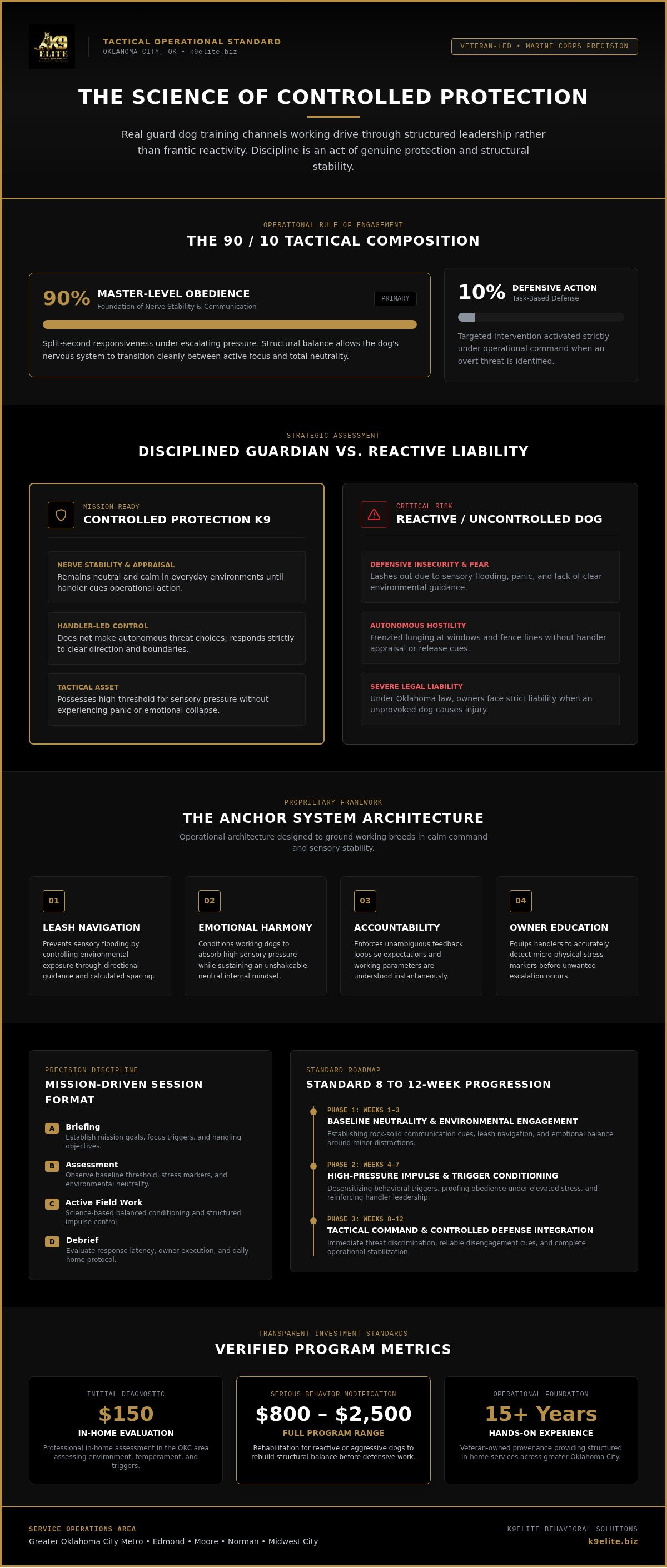
A fierce dog is not a protection dog. Without ironclad discipline, an aggressive animal is simply a catastrophic liability waiting to happen. If you're worried about safeguarding your home while dreading the stress of handling an unpredictable breed, you're not alone. Real guard dog training is ninety percent obedience and ten percent defensive action, channeling natural drive through structured leadership rather than frantic reactivity.
You deserve real security, not a hair-trigger companion that risks severe legal penalties or endangers guests. In this tactical guide, you'll learn the science-based methods behind professional guard dog training and discover how to forge a disciplined, protective partnership with your K9. We'll examine the critical line between nerve stability and uncontrolled aggression, establish mission-ready baseline standards, and outline the clear roadmap to developing a loyal guardian that remains a calm family companion until an actual threat appears.
Table of Contents
The Strategic Difference Between a Guard Dog and a Reactive Dog
Guard dog training is a disciplined, task-based operational mission. It is never an outlet for an animal to vent rage or erratic temper. A reactive dog lashes out because it feels terrified, overwhelmed, or entirely devoid of guidance. In contrast, an authentic protection K9 works strictly within a structured framework established by clear handler leadership. While untrained observers often mistake frenzied barking for protective drive, historical guard dog instincts and roles rely on purpose, nerve stability, and situational appraisal rather than sheer panic.
Viciousness represents an outright failure of training. In professional working canine circles, an uncontrollable dog is not an asset; it is a critical liability. High-drive working breeds require structural balance as their absolute foundation. This balance ensures the animal's nervous system can toggle cleanly between active focus and complete rest. Without that equilibrium, natural suspicion devolves into unpredictable danger.
Aggression vs. Controlled Protection
Controlled protection is a disciplined state of high-alert obedience where every physical action remains entirely subject to handler direction. In an elite training program, behavioral triggers are identified, tested, and conditioned so the dog does not make autonomous choices about who presents a threat. The handler establishes clear verbal and physical signals that indicate whether an active mission is underway or whether the dog must stand down. When the handler is calm, the dog remains neutral. The animal acts only when an overt threat is identified and an operational command is issued.
The Liability of the Untrained "Guard" Dog
Encouraging a powerful breed to bite or threaten strangers without master-level obedience creates a legal and physical disaster. Under Oklahoma law, owners face strict liability when an unprovoked dog causes injury, meaning intent or lack of prior warning offers zero legal defense. A dog that lunges at the window or aggressively corners visitors while left to its own devices is rarely protecting the property. Instead, it is usually a fearful animal acting out of defensive insecurity. When an owner misinterprets this fear as genuine loyalty, the animal spirals into chronic stress. Owners dealing with this confusion must pursue structured aggressive dog rehabilitation OKC programs to rebuild basic emotional stability before ever considering specialized protection tasks.
The Science of Protection: Obedience as the Tactical Foundation
Mastery over high-drive protection work begins and ends with absolute obedience. A canine capable of physical defense must respond to handlers with split-second precision, even during chaotic encounters. Elite guard dog training relies on balanced, science-based conditioning rather than raw physical intimidation. When handlers enforce fair, consistent boundaries, discipline becomes an act of genuine compassion. It removes ambiguity, lowers stress, and builds an unbreakable operational bond between handler and K9.
Without rock-solid communication, high-drive working breeds quickly unravel under pressure. Behavioral science shows that clear cues protect working animals from sensory overload, a principle central to managing reactive canine behavior under escalating tension. Elite control does not restrict a dog's working drive; it directs that energy into productive channels.
The Role of the ANCHOR System
The proprietary ANCHOR System provides the operational architecture required to keep working dogs steady under stress:
Leash Navigation: Prevents psychological flooding by controlling environmental exposure through directional guidance and strategic spacing.
Emotional Harmony: Conditions the dog to process intense sensory pressure while maintaining a calm, neutral mindset.
Accountability and Communication: Ensures unambiguous feedback loops so the dog understands expectations immediately.
Owner Education: Equips handlers to read subtle physical stress markers, which serves as the deciding factor in mission success.
Veteran-Led Discipline and Precision
Operations led by Marine Corps veteran Coty Cortez treat guard dog training with military precision. Sessions follow a disciplined structure: operational briefing, initial baseline assessment, active field conditioning, and handler debrief. Precision control matters far more than bite force. If a dog cannot instantly release or return to a heel under extreme distraction, it cannot safely deploy. Homeowners looking to establish this operational baseline can work directly with K9Elite Dog Training to build functional obedience from the ground up.
Guard Dog Training vs. Personal Protection: Choosing Your Mission
Guard dog training focuses on fixed terrain, while personal protection focuses on handler defense across dynamic public environments. A home guard dog secures physical territory such as your yard, entry points, and fenceline. In contrast, an executive personal protection dog shadows you everywhere, remaining rock-solid in restaurants, busy streets, or family vehicles. These distinct roles demand fundamentally different drives. The official AKC guide to guard dog breeds illustrates how innate territorial instincts contrast with the intense social stability needed for travel companions.
Property defense requires capitalizing on your dog's home field advantage. Training the animal directly inside the environment it must protect exposes layout-specific blind spots. Using specialized management tools, handlers can systematically condition these spatial boundaries:
The Drag Leash: Allows a handler to redirect a dog away from doors or gates without invading its personal space or triggering conflict.
Muzzle Conditioning: Serves as a proactive safety layer during high-arousal property drills, ensuring safety while setting territorial markers.
Threshold Stays: Enforces mandatory boundary pauses at exterior entryways to prevent impulsive door-dashing.
Functional Safety for the Oklahoma City Home
Oklahoma City records over 18,000 threat incidents annually, with property crime accounting for 54.4% of reported offenses. FBI data reveals that residential properties represent roughly 90% of all burglaries, with 56% taking place during daylight hours. Local families in Moore, Norman, and Edmond need practical deterrence, not extreme aggression that risks strict liability violations. Deploying dedicated K9 protection training Oklahoma City protocols inside your personal living space ensures your canine knows how to deter intruders while staying completely safe around neighborhood children.
The Myth of the Board and Train "Fix"
The pitch for board and train is seductive: send your dog away for a few weeks, get back a trained one. In reality, protection tasks cannot be outsourced. Dogs frequently succumb to the facility effect, obeying kennel staff flawlessly in an artificial training center but reverting to chaos once back on family property. The animal respects the trainer who ran the drills, not the family waiting at home. True security demands owner involvement from day one, grounding leadership directly where your family lives.
Identifying Triggers and Establishing Structural Balance
A reliable guardian is built through emotional stability, not relentless aggression. During a professional behavioral assessment, trainers isolate specific behavioral triggers, such as sudden loud noises, unfamiliar delivery drivers, or fence-line intrusions. Mapping these stimuli reveals whether a reaction stems from defensive panic or clear focus. Structural balance establishes predictable rules and daily routines across the household. This operational structure prevents a high-drive canine from becoming hyper-vigilant, keeping stress hormones low and mental clarity high.
Precision safety equipment protects both handler and canine during early evaluations. Using a drag leash allows the owner to step on or guide the line without reaching into the dog's personal space, defusing territorial conflict before it ignites. Muzzle conditioning serves as an equally compassionate, temporary tool. A properly conditioned basket muzzle provides vital safety margins, allowing the dog to pant, drink, and take treats without feeling trapped or restricted during high-arousal drills.
The Initial $150 In-Home Evaluation
Every successful protection journey starts with an initial $150 in-home evaluation throughout the Oklahoma City metropolitan area, including Edmond, Moore, Norman, and Midwest City. A Marine Corps veteran trainer inspects the home environment, observes boundary reactions, and audits owner handling mechanics in real time. Because every canine possesses a unique genetic threshold, this diagnostic session forms the basis of a tailored mission plan designed for your living room rather than a generic training center. Secure your household's safety profile today by scheduling your diagnostic in-home dog training evaluation.
Managing Drives and Emotional Harmony
Flooding occurs when a canine faces overwhelming pressure before possessing the mental tools to cope, resulting in defensive shutdown or erratic lunging. Guard dog training avoids this trap by introducing stressors gradually, maintaining emotional harmony under pressure. Clear, singular commands establish handler leadership, showing the dog that the human assesses the environment and makes operational decisions. Consistency within the domestic boundary remains paramount; if a guardian dog faces conflicting rules between family members, its decision-making fractures under real-world pressure. Once structural balance is secured at home, you can book a professional evaluation to advance to field drills.
Launching Your Mission: Professional Protection Training in OKC
Developing a reliable canine protector is an operational deployment, not an overnight trick. A standard behavior modification or tactical protection course requires 8 to 12 weeks of structured conditioning. During this window, handler and canine progress through progressive stages, moving from baseline obedience to environmental stress testing and targeted defense commands. The mission doesn't end when formal drills conclude; access to lifetime support ensures your team retains sharp handling mechanics as your dog matures. Establishing unambiguous communication and calm leadership preserves domestic bonds, keeping powerful, driven working breeds thriving in homes rather than surrendered to municipal shelters.
Investing in Tactical Security
Dedicated behavior modification and structured guard dog training programs run from $800 to $2,500 for a full program. Generic group obedience classes teach basic cues in sterile environments, but they crumble when severe distractions or perimeter threats emerge. A veteran-led program yields an exceptional return on investment by mitigating real-world liability, establishing ironclad control, and instilling absolute confidence in your dog's judgment. K9Elite delivers in-home tactical training directly to property owners across Edmond, Moore, Norman, Midwest City, and the wider Oklahoma City metropolitan area.
Your First Step: The Assessment
Every successful military or tactical operation relies on accurate field intelligence before execution. A professional evaluation identifies critical communication gaps, audits environmental triggers, and verifies whether your canine possesses the nerve stability required for high-level protection work. Our mission-driven structure moves systematically from initial diagnostic assessment to custom mission plan execution, backed by over 15 years of hands-on experience and AVSAB standard compliance. Take control of your home's defensive posture and build a disciplined partnership: Schedule your $150 in-home evaluation with K9Elite today.
Secure Your Household With Disciplined K9 Leadership
True protection is defined by elite control, not unpredictable aggression. By grounding your canine's natural drives in balanced obedience, you turn potential liabilities into steady family security. Effective guard dog training relies on the science-based ANCHOR System to build clear communication, keep emotional pressure manageable, and establish lasting structural balance inside your home.
You don't have to navigate high-drive breeds alone. Coty Cortez brings Marine Corps discipline and veteran-led precision straight to your living room, ensuring you command authority on your own property. Backed by our lifetime support guarantee, you'll gain the ongoing resources needed to keep your K9 reliable for years to come. Take the decisive first step toward safety and peace of mind today: Schedule your professional $150 in-home evaluation in OKC.
Frequently Asked Questions
Is guard dog training safe for families with young children?
Yes, professionally conducted guard dog training enhances household safety because it establishes total impulse control and clear boundaries. A dog conditioned through balanced methods views the family unit as leaders to protect, not subjects to dominate. We enforce strict bite inhibition and emotional stability so your K9 remains a gentle, tolerant family companion around children, alerting only when an actual external threat presents itself.
What is the difference between a guard dog and a personal protection dog?
A guard dog is trained to secure static territory, while a personal protection dog defends a specific handler wherever they travel. Property guardians focus on home perimeters, fences, and doorway deterrence. Personal protection dogs require higher social tolerance and nerve stability to accompany owners through stores, office parks, and vehicle commutes without reacting to harmless public commotion.
How much does guard dog training cost in Oklahoma City?
In Oklahoma City, foundational diagnostics begin with an initial $150 in-home evaluation from K9Elite to assess temperament and environmental layout. Full programs focused on serious behavioral modification and tactical protection skills typically range from $800 to $2,500 depending on your dog's baseline obedience and defensive goals. Every quote is transparent, establishing a clear mission plan tailored to your household before field work starts.
Can any breed be trained for protection, or are certain breeds better?
While working breeds like German Shepherds, Belgian Malinois, and Rottweilers possess natural genetic drives for defense, individual temperament matters far more than breed pedigree. Protection tasks demand rock-solid nerve stability, high trainability, and low anxiety. A fearful dog cannot handle tactical pressure, making an initial behavioral evaluation essential to determine whether your specific canine possesses the mental stability required for defensive work.
Will guard dog training make my dog aggressive toward my friends or neighbors?
No, professional training does not create indiscriminate aggression; it installs reliable, handler-directed restraint. Reactive barking stems from unchecked panic, whereas tactical guard dog training instills neutrality toward invited guests. Your dog learns that you dictate who enters the property. Unless you issue a specific command or an unprovoked threat breaches physical boundaries, the animal remains completely calm, composed, and social in standard domestic settings.
How long does it take to fully train a protection dog?
Establishing a dependable protection foundation generally requires 8 to 12 weeks of structured, consistent training. The early weeks secure advanced obedience and leash navigation. Subsequent stages introduce controlled threat scenarios, boundary defense, and environmental stress drills. Because true security demands ongoing handler sharpness as situations evolve, long-term operational success is reinforced through our dedicated lifetime support framework across the Oklahoma City metro.
What is the "facility effect" and why does K9Elite avoid it?
The facility effect happens when a dog learns to perform tasks inside a sterile commercial training center but fails completely upon returning home. In off-site facilities, dogs respond to trainer authority rather than family leadership. K9Elite avoids this breakdown by working directly inside your home across Edmond, Moore, and Norman, conditioning responses on your own property where behavioral triggers actually occur.
Do I need to be present for the training sessions?
Yes, your presence and direct involvement are mandatory for mission success. You cannot outsource canine leadership to an outside trainer and expect lasting reliability. Our tactical methodology educates you on leash mechanics, vocal markers, and stress cues so you command authority. By participating in every briefing and active drill, you ensure your K9 looks to you, not an external trainer, for tactical direction.


Comments