
Building confidence in a fearful dog OKC through daily support
Confidence isn’t built by pushing a fearful dog into situations it wants to escape. Building confidence in a fearful dog in OKC starts with predictable routines, respectful boundaries, a secure place to rest, and gradual practice at a pace the dog can manage. Small, steady steps help your dog understand what to expect.
It’s understandable to want your dog to feel comfortable around people, sounds, and new places. But forced greetings or overwhelming exposure can make things harder. Calm, manageable experiences give your dog room to observe and recover. Progress may look modest at first: taking a treat, entering a room, or relaxing nearby.
This guide explains how to create structure at home, recognize and respect your dog’s limits, and introduce unfamiliar experiences without rushing. You’ll also learn how training classes can offer controlled opportunities for gradual practice, and how to tell when your dog needs a quieter next step.
Table of Contents
1. Creating a safe, predictable routine
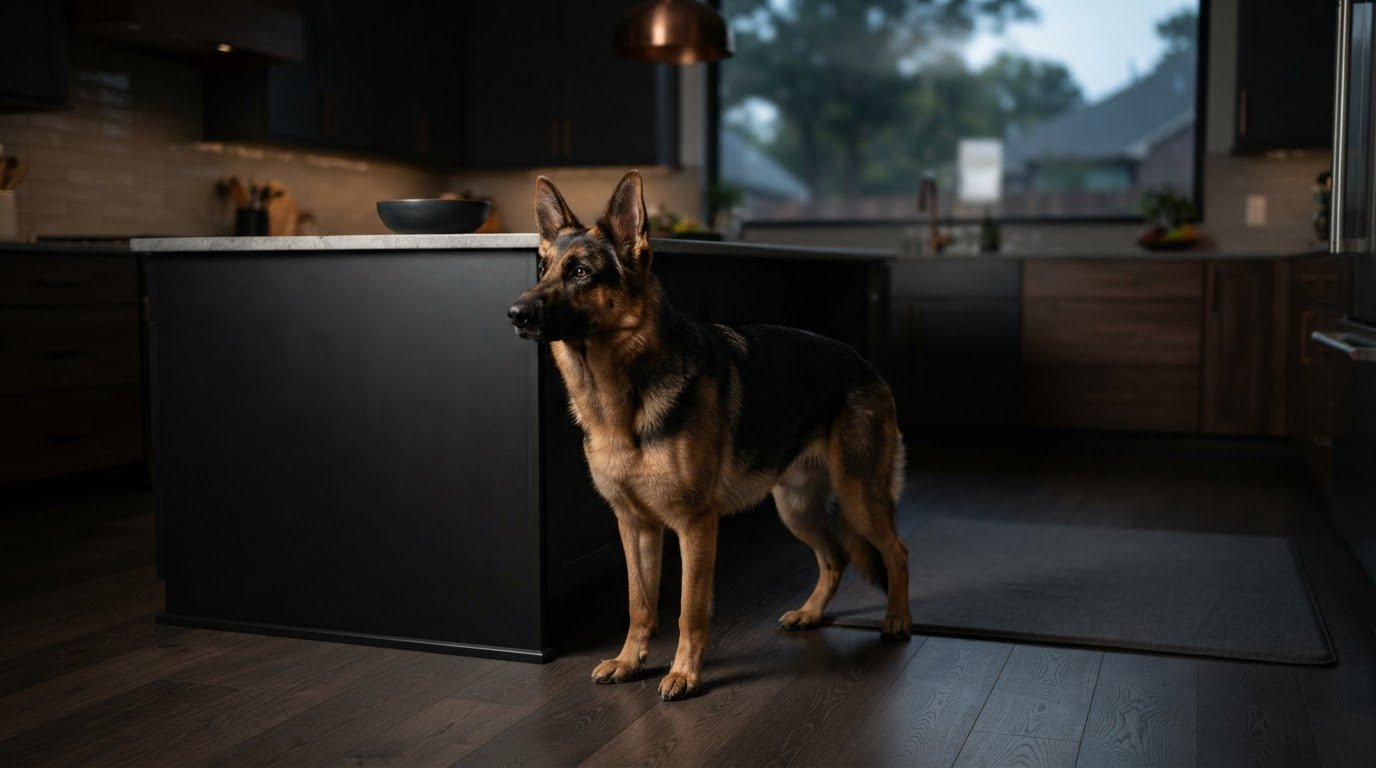
Begin with a repeatable daily sequence for meals, bathroom breaks, walks, rest, and play. A fearful dog has fewer surprises when breakfast follows the morning bathroom break and a walk follows a calm leash-up routine. Keep the order steady, even if the timing changes. Predictability helps your dog understand what happens next and lets you guide the day with purpose.
How can you help a fearful dog feel safe at home and on walks? Use familiar routines, calm guidance, and manageable routes. At home, keep food, rest, and play in a consistent order. Outside, choose a quieter route your dog can handle and allow time to observe without forcing interaction.
Make everyday access consistent, too. Ask your dog to sit before opening the door, setting down a meal, or attaching the leash. Use the same cue and provide access when your dog responds. These small patterns make interactions easier to predict. Household rules can also include waiting at thresholds, walking beside you on leash, and settling on a mat during meals.
Keep meals and walks in a familiar sequence.
Use one clear cue, such as “sit,” before a treat or outing.
Practice waiting at the door before stepping outside.
For a dog uneasy around a vacuum, break the task into gradual steps. Begin with the vacuum turned off in the room, giving your dog space to notice it from a comfortable distance. Later, turn it on farther away. If your dog stays calm, bring it closer gradually over separate practice sessions. If your dog freezes, hides, barks, or tries to escape, increase the distance or stop. The goal is manageable exposure, not making the dog endure the sound.
Consistency also means responding calmly when the routine changes. A loud noise, unfamiliar visitor, or different walking route can unsettle a fearful dog, even after steady progress. Return to a familiar activity, such as resting in a quiet room or practicing a known cue. Avoid adding demands while your dog is already stressed.
Treat small responses as useful information. Note whether your dog takes a treat, explores the yard, or settles after hearing the vacuum. These observations help you judge whether a step is manageable. When building confidence in a fearful dog in OKC, make each practice session clear: set up one situation, give your dog space to respond, and repeat the routine that supports calm behavior.
Use the same response pattern around different rewards: ask your dog to sit before offering a treat, starting a walk or outing, petting, or serving a meal. This makes interactions predictable. A steady schedule for feeding, walks, and play can also ease anxiety, while household manners such as walking nicely on leash, waiting at doors, and lying down during meals provide clear rules to follow.
A fearful rescue dog’s confidence may fluctuate. Loud noises, unfamiliar situations, or changes to routine can temporarily unsettle it, even when familiar patterns are in place.
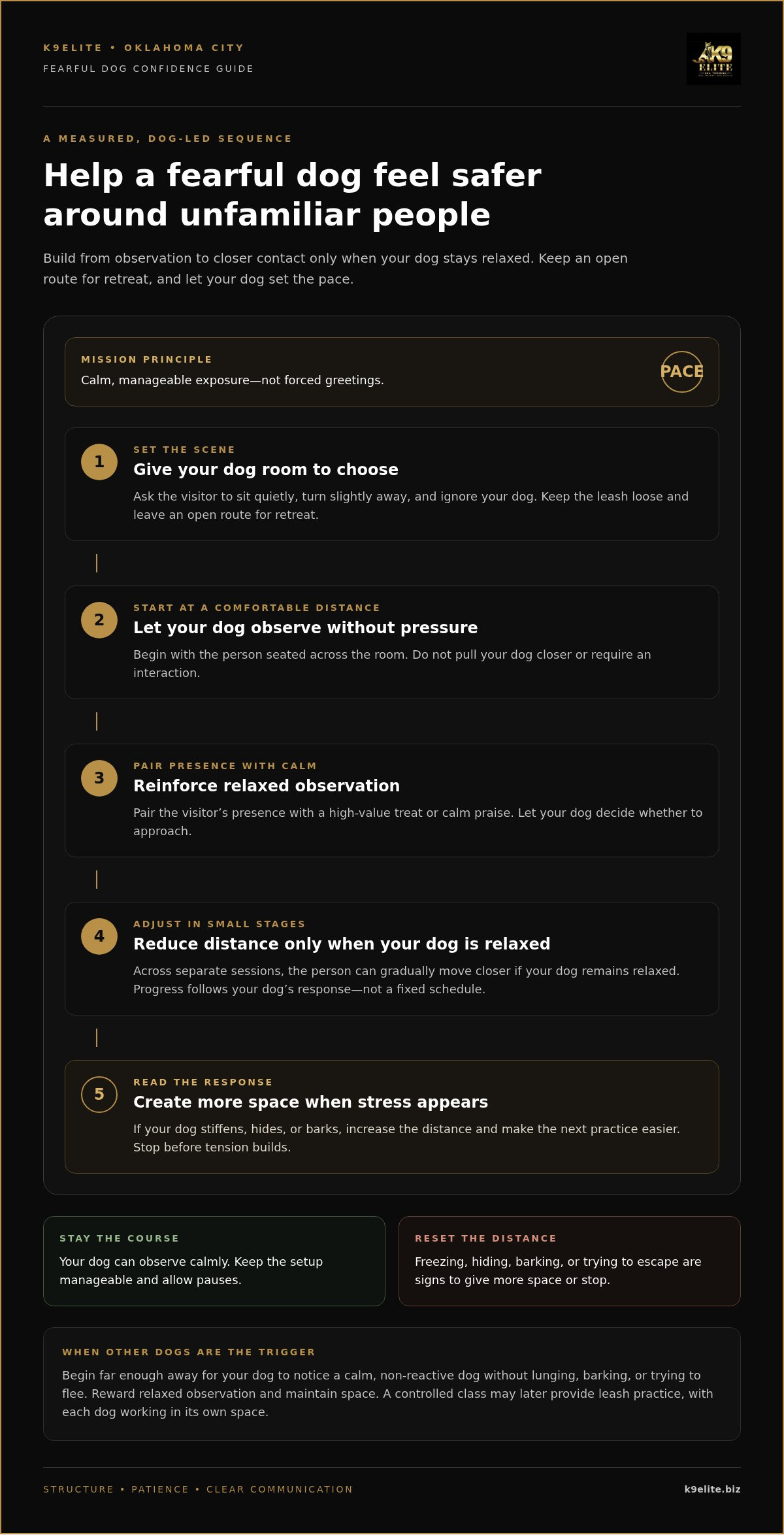
2. Helping dogs feel safer around unfamiliar people
A fearful dog may freeze, hide, bark, or try to escape when unfamiliar people approach. Rescue dogs may also have fears linked to neglect, instability, limited socialization, or major life changes. These reactions signal discomfort, not stubbornness. Manage distance and exposure so your dog can observe without pressure to interact.
What are signs a fearful dog needs professional behavior help or veterinary care? Seek veterinary or behavior support when fear is severe, persistent, or disrupts everyday routines, especially if your dog repeatedly tries to escape or reacts intensely around people. A veterinarian or behavior professional can assess the situation and guide next steps.
Avoid scolding, leash corrections, or forced greetings. Punishment can intensify fear, and pushing a dog into close contact can overwhelm it. Start with a controlled setup: ask a visitor to sit quietly, turn slightly away, and ignore your dog. Let your dog choose whether to approach. Keep the leash loose and leave an open route for retreat.
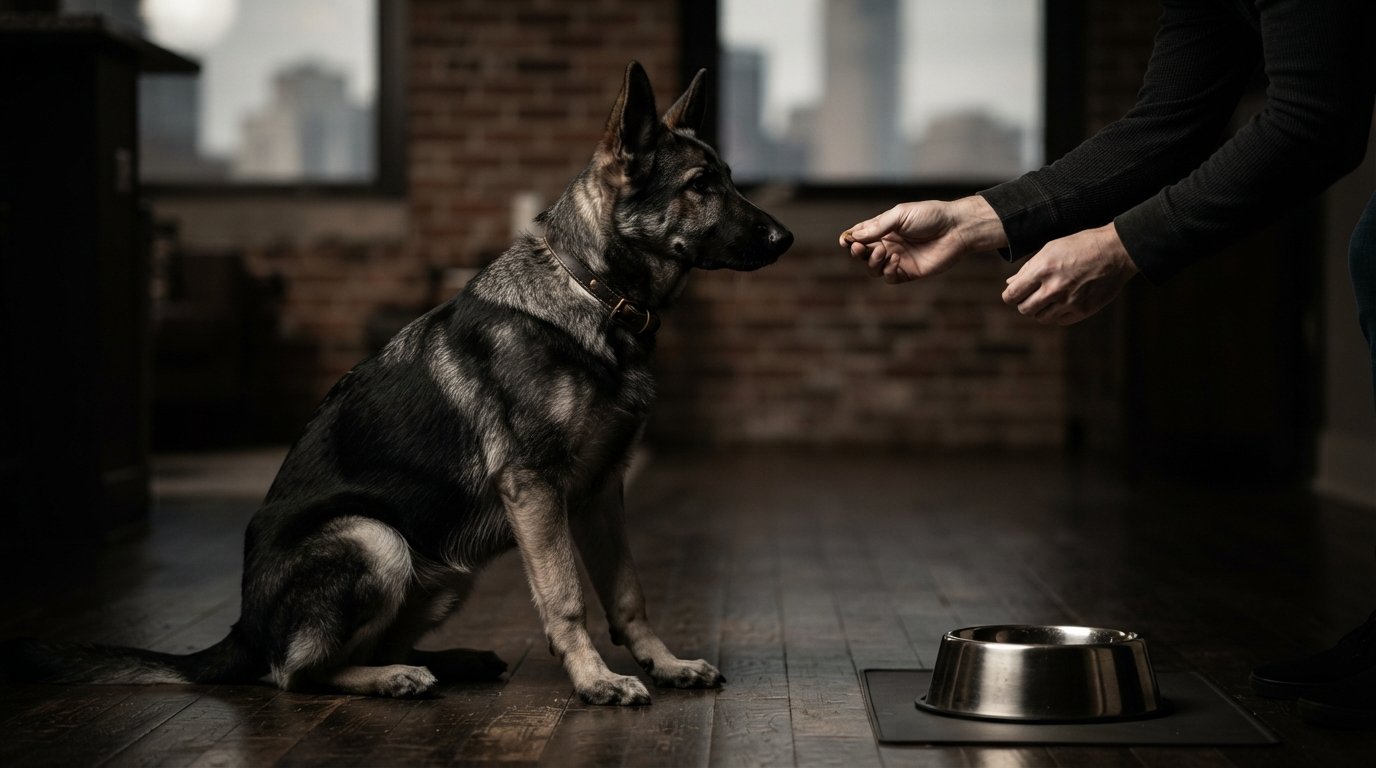
Build exposure in small stages. For example, begin with a person seated across the room, then gradually reduce the distance over separate sessions if your dog remains relaxed. Pair the person’s presence with a high-value treat or calm praise. If your dog stiffens, hides, or barks, increase the distance and make the next practice easier. Progress depends on your dog’s response, not a fixed schedule.
Approach new places at the same gradual pace. Choose a quiet sidewalk or open area where your dog can look around without close encounters. Allow sniffing and pauses rather than pulling toward a destination. Short, calm walks in safe settings help your dog take in information at its own pace. Avoid crowded locations while your dog is still learning to stay settled around unfamiliar people.
Other dogs can be a separate trigger. Begin at a distance where your dog can notice a calm, non-reactive dog without lunging, barking, or trying to flee. Maintain space, reward relaxed observation, and end the session before tension builds. A controlled class may later offer leash practice, with each dog working in its own space.
What training methods should be avoided with fearful dogs? Don’t scold, force contact, or expose your dog to so many people or dogs that it becomes overwhelmed. Flooding can lead to shutdown or escalation rather than steady learning.
If fear around people or dogs keeps limiting daily life, structured behavior modification support can help you plan gradual practice around your dog’s specific triggers.
3. Building trust by respecting boundaries
Trust grows when your dog can influence how close an interaction gets. If your dog moves behind a chair when you reach to pet them, stop reaching and give them space. Don’t follow, corner, or pull the dog back toward you. Respecting that retreat can make future interactions feel more manageable.
Use a simple consent check before touching. Stand at an angle, keep your hands low, and pause instead of leaning over the dog. If the dog approaches with a loose body, offer a brief touch on the chest or shoulder, then stop. If the dog turns away or steps back, end contact. Let the dog choose whether to return.
Household members should follow the same rules. Ask visitors not to reach through a doorway or call the dog toward them. A visitor can sit quietly while the dog stays at a comfortable distance. Children should leave the dog alone while it eats, sleeps, or rests. Consistent boundaries prevent confusing encounters and give everyone a clear role.
Respecting your dog’s space doesn’t mean leaving every decision to the dog. You can provide calm leadership by managing the environment and guiding predictable transitions. If your dog guards a toy, don’t reach into the dog’s space or grab the item. Instead, create distance, use a clear cue the dog knows, and guide the dog away before removing access. A drag leash can help guide movement without reaching toward the dog.
Notice what happens just before your dog retreats or stiffens. A hand over the head, a fast approach, or a loud greeting may be the pressure point. Change one part of the setup, then observe the response. Slower movement or more distance can help your dog stay present. This is useful information, not disobedience to correct.
Build predictable interactions through small, repeatable choices:
Pause before approaching your dog’s bed or resting area.
Invite contact with a quiet cue, then wait for the dog’s response.
Stop petting when the dog moves away or turns its body.
Ask visitors to ignore the dog until the dog approaches voluntarily.
Keep your voice steady and your movements deliberate. If a boundary is crossed by accident, stop, create space, and resume only when the dog is settled. Avoid scolding a fearful response. Punishment can add pressure without showing the dog what to do instead. A calm reset gives the next interaction a clearer starting point.
For building confidence in a fearful dog in OKC, respecting boundaries means balancing clear guidance with your dog’s ability to disengage. Each calm choice, such as staying nearby while you sit or returning after a short retreat, offers useful evidence about what your dog can handle next.
4. Providing a secure resting space
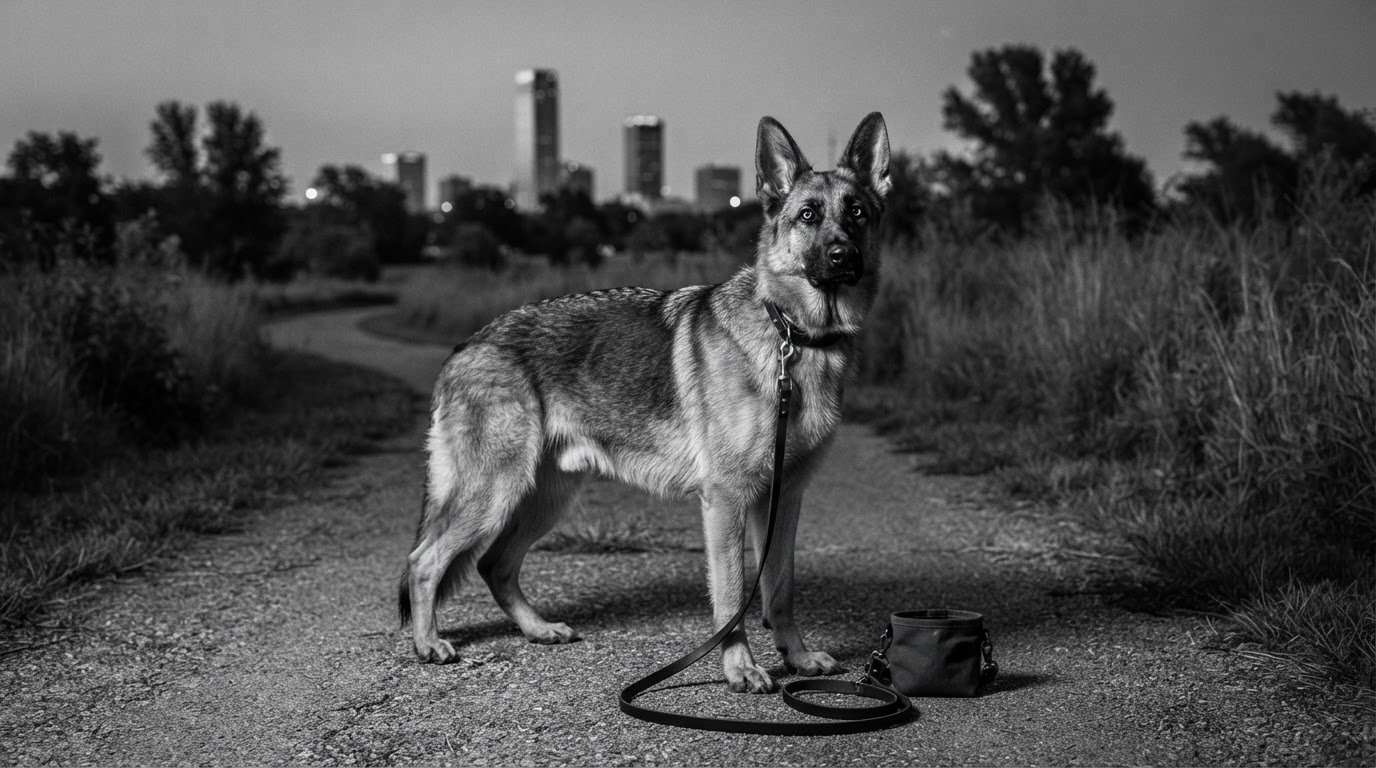
Choose a quiet location where your dog can retreat without being followed. A corner of a bedroom or a low-traffic area may work better than a spot beside the front door, where visitors and delivery sounds can interrupt rest. Keep the space available throughout the day. A fearful dog needs the option to step away when household activity, a dropped pan, or an unfamiliar visitor feels like too much.
Set up the retreat with familiar, comfortable items. Place bedding and a familiar toy inside a crate or quiet area, then keep the layout consistent so your dog recognizes the space. If you use a wire crate, a blanket over the top and sides can make it feel more enclosed. Leave enough airflow and keep the entrance clear so your dog can move in and out freely.
Introduce the space without turning it into a command post. Place a treat near the entrance, then let your dog investigate at its own pace. If the dog steps inside, allow it to leave freely. Repeat this calmly during ordinary moments, rather than waiting until a visitor arrives or a loud sound has startled the dog. The retreat should signal rest, not pressure.
Household rules protect the space. Ask family members and visitors not to reach into the crate, call the dog out, or disturb it while resting. If a child wants to pet the dog, for example, ask them to wait until the dog leaves the quiet area voluntarily. This boundary gives the dog control over contact and prevents a safe place from becoming a trap.
Keep the resting area away from busy walkways and the front door.
Use familiar bedding or toys, and avoid frequent layout changes.
Let the dog enter and leave without being cornered or pulled out.
Tell visitors that the resting space is off-limits.
Make the retreat part of a clear household plan. When guests arrive, guide your dog toward the quiet area before the doorway gets crowded. Offer a familiar toy or food enrichment there, then let the dog settle without repeated calls. If the dog chooses to observe from a distance, don’t insist on a greeting. Calm observation is a useful step.
Watch how your dog uses the space. Voluntarily returning after exploring, lying down while people move through the room, or resting after a sudden noise are practical signs that the setup is helping. If your dog avoids the crate, try a quiet bed in another location. The goal is a reliable retreat that supports recovery and gives your dog room to disengage.
5. Using training classes for gradual practice
A class can give a fearful dog structured practice around people and other dogs, but the setup matters. Look for a trainer who allows personal space, adjusts distance, and uses rewards to reinforce calm behavior. A class should give your dog room to observe, not require close greetings or constant interaction.
What should you look for when choosing a trainer for a fearful dog? Choose someone who explains each exercise, notices signs of stress, and changes the setup when your dog struggles. Ask how the trainer avoids overwhelming exposure and helps owners continue practice between sessions.
For a first class, choose one manageable goal, such as watching another dog from a distance while still being able to take a treat. Arrive with time to settle, then choose a position away from the entrance and busy traffic. Keep your dog on leash and reward calm observation. If your dog freezes, barks, or tries to escape, increase the distance or pause the exercise.
Which dog trainers in Oklahoma City specialize in fearful or reactive dogs? Look for local trainers whose behavior work includes fear and reactivity and whose class format preserves space between dogs. Ask about gradual exposure, reward-based practice, and how exercises are adapted when a dog shows stress.
Are there positive-reinforcement dog behaviorists or veterinary behaviorists near Oklahoma City? For health concerns or guidance toward behavior support, Oklahoma City owners can start with their veterinarian. For training, seek a practitioner who uses rewards and controlled exposure, while considering your dog’s comfort in a group setting.
Classes should build skills in stages. A useful progression might begin with settling at the edge of the room, then practicing a familiar cue while another dog remains visible at a comfortable distance. Move closer only when your dog can stay engaged and recover easily. A trainer should help you decide when to repeat, simplify, or end an exercise.
Choose a class that allows dogs to work in their own space.
Tell the trainer which sights or sounds trigger your dog’s stress.
Reward calm observation rather than demanding interaction.
Pause or increase distance if your dog cannot settle or respond.
Not every fearful dog is ready for a group class. If the room, movement, or nearby dogs overwhelm your dog, begin with quieter practice and build toward a class setting. The mission is controlled learning, not simply attendance. For help planning gradual practice, discuss training options suited to your dog’s behavior.
Look for Oklahoma City trainers experienced with fear and reactivity who use gradual, reward-based exposure, adapt exercises to a dog’s stress level, and maintain space between dogs.
K9Elite: In-Home Evaluation
K9Elite’s In-Home Evaluation assesses your dog’s behavior and home environment to help identify triggers and practical next steps. Consider an evaluation when fear disrupts walks, visitor routines, or your ability to practice calmly at home.
Founded by Coty Cortez, a Marine Corps veteran and career dog trainer, K9Elite’s mission is: “Empower dog owners with the skills and confidence to lead their dogs effectively, keep more dogs out of shelters, and build strong, reliable partnerships between dogs and their families.” Depending on your goals, Behavior Modification or Obedience Training may support the next phase of your plan.
Contact K9Elite to discuss an In-Home Evaluation for your dog.
Take the Next Step With a Clear Plan
Let your dog’s response guide the next practice goal. If a new sound causes a brief pause, offer a calm opportunity to investigate from a comfortable distance. If a familiar setting feels manageable, build on that success with one small change. Building confidence in a fearful dog in OKC means choosing a sensible next step and giving your dog time to process it.
Keep a brief record of what your dog notices, how they respond, and what helps them recover. These observations can make your next decision more precise and help you spot patterns that are easy to miss in the moment.
Contact K9Elite to discuss your next step. A thoughtful plan gives you and your dog a clear direction forward.
Frequently Asked Questions
What are the best ways to build confidence in a fearful dog?
Give your dog safe opportunities to make choices and explore. Try a scent game by scattering a few pieces of food in a familiar room, or offer a puzzle toy that encourages problem-solving. Reward curiosity, such as investigating a new object or stepping onto a different surface. Keep a brief progress log noting the situation, your dog’s response, and what helped. Use it to guide your next training goal.
What is a step-by-step desensitization and counterconditioning plan for a fearful dog?
Pair a mild version of the trigger with something your dog values, then increase the challenge gradually. For a dog worried about a doorbell, begin with a quiet recording at low volume. Offer a high-value treat immediately after the sound, pause, and repeat while your dog remains comfortable. Raise the volume in later sessions only if your dog stays relaxed. If your dog shows distress, lower the intensity or stop and regroup.
Are there Oklahoma City dog training classes or support groups for shy dogs?
Oklahoma City owners can explore K9Elite Group Classes for structured training practice. A shy dog can work on familiar skills while learning to focus around activity in a class setting. Before attending, define a manageable goal, such as responding to a known cue with other dogs nearby. If your dog cannot engage with you in that environment, an In-Home Evaluation or Behavior Modification can help establish a training plan.
How long does it take to build confidence in a fearful dog?
There is no fixed schedule; progress depends on your dog’s response and may fluctuate. Some rescue dogs settle in within days, while others need weeks or months for their personalities to emerge.
Comments