
How to Stop Dog Counter Surfing and Keep Food Out of Reach
To stop a dog from reaching counters and tables, put away food and wipe up residue, block kitchen access when you can’t supervise, and teach reliable “leave it” and mat behaviors using rewards. If you’re learning how to stop dog counter surfing in OKC, treat prevention and training as one plan: every successful food grab can reinforce the habit, so stay consistent even after your dog learns the cues.
It’s frustrating to turn your back for a moment and find food missing, but counter surfing isn’t simply a bad habit a dog will always outgrow. The behavior can continue when the dog has been rewarded by finding food, which makes managing access part of the long-term plan.
This guide explains why dogs counter surf, how to teach “leave it” in manageable steps, and how to create a safer routine around counters and tables. You’ll also learn how to reward better choices and maintain clear boundaries, giving your dog a predictable alternative while food is being prepared.
Table of Contents
What is dog counter surfing?
Dog counter surfing is taking food or other items from a counter or table. A dog might jump up with all four paws or brace its front legs on the edge. Finding food can reward the search and make it more likely to happen again. Even licking a trace of cooking residue may encourage another attempt.
How long does it usually take to train a dog to stop counter surfing? There’s no fixed timeline. If your dog has found food on the counter, the behavior may take a few weeks without another successful grab to fade.
When should a dog owner consult a professional trainer or veterinary behaviorist about counter surfing? Seek professional guidance if your dog guards stolen food, threatens people who approach, or keeps reaching food despite consistent prevention. If your dog may have swallowed harmful food or packaging, contact a veterinarian promptly.
Remove the reward before training. Put food, dishes, and food wrappers away as soon as you finish preparing or serving a meal. Wipe the counter after cooking to remove grease, crumbs, and sauce residue. Grapes, raisins, chicken bones, and chocolate can be harmful to dogs, so keep them secured along with plastic wrapping.
Manage the kitchen during every meal-preparation session. Use a gate or closed door to block access whenever you can’t supervise. If you leave food unattended, put your dog in another room and close the door. A single successful grab can strengthen the habit, so don’t leave food within reach while stepping away, even briefly.
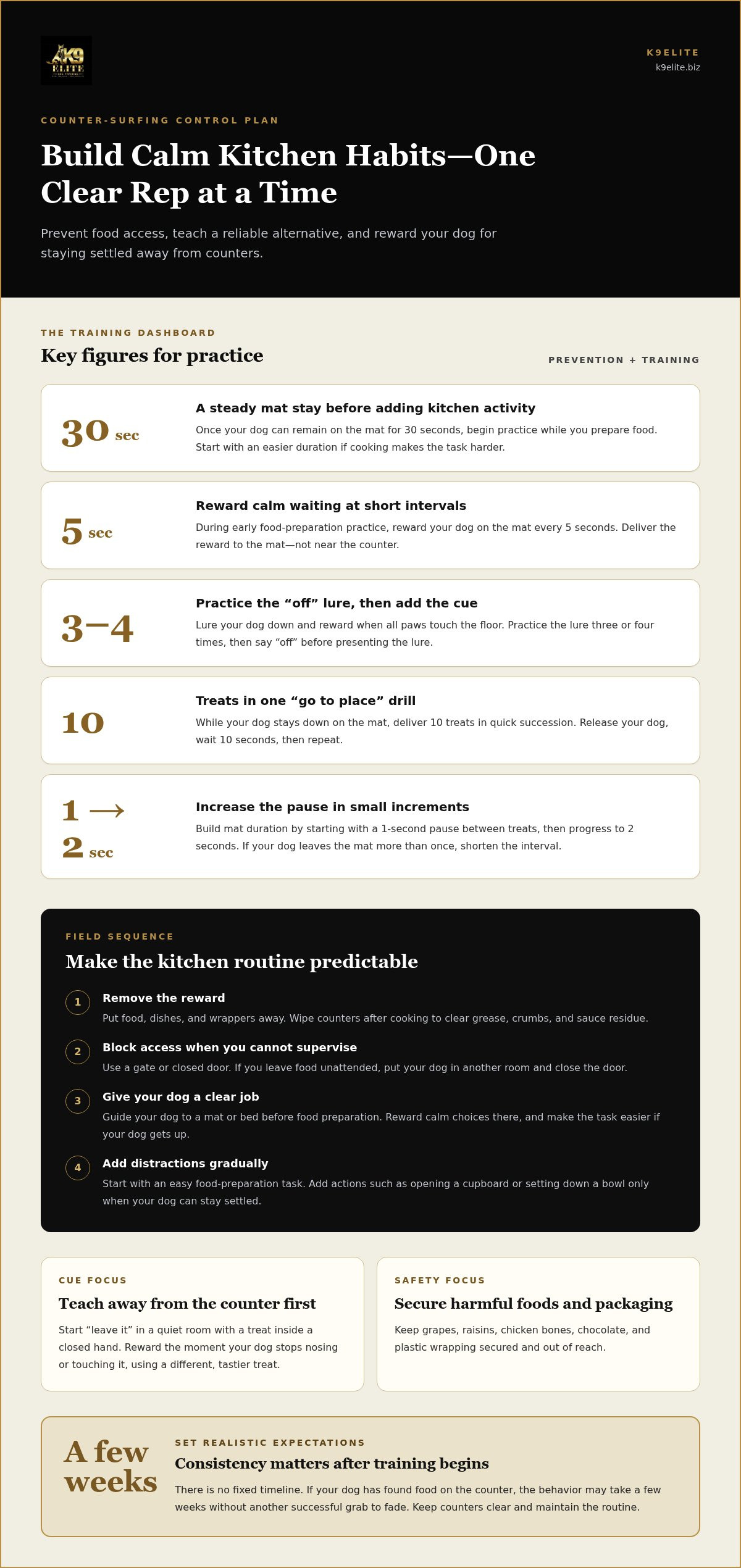
Teach a clear place behavior away from the counter. Reward your dog for stepping onto a mat or bed, then for lying down. Once your dog can remain there for 30 seconds, practice while you prepare food. Begin with an easier duration because cooking adds distractions and creates a new training picture.
Build calm waiting in short intervals. During early food-preparation practice, reward your dog on the mat every 5 seconds. Deliver each reward to the mat, not near the counter, so the location stays clear. If your dog gets up, reset with less distracting preparation or a shorter stay. Increase the challenge only after calm behavior becomes consistent.
Reinforce the choice you want repeated. When your dog walks away from a counter or settles on the mat, reward that choice promptly. Keep counters clear after the meal, too. This consistent routine removes kitchen rewards and gives your dog a practical job while you prepare food.
Teaching the “leave it” cue
Teach “leave it” as a clear cue to disengage, not as a last-second shout while your dog reaches for food. Start away from the kitchen, where distractions and competing rewards are limited, then progress to controlled practice near counters.
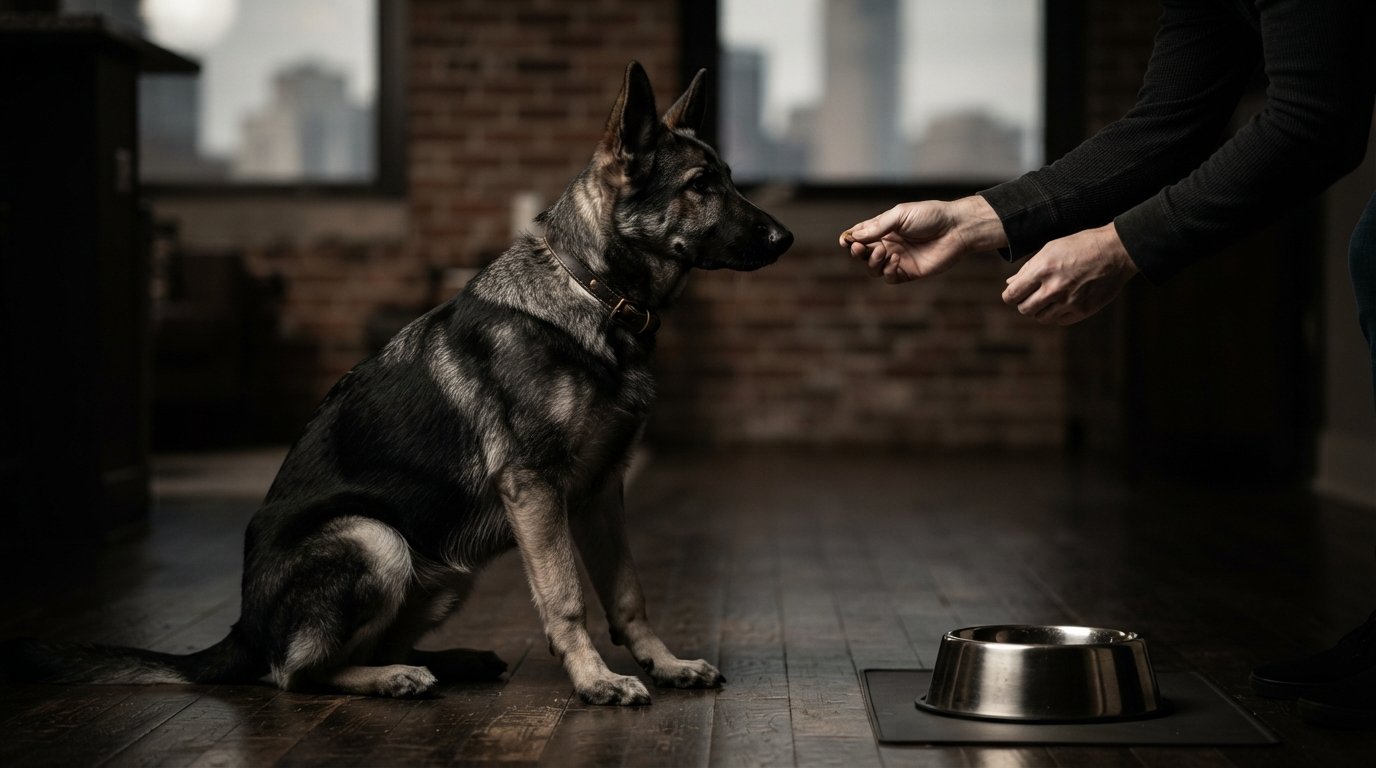
Teach “leave it” with a low-level temptation. In a quiet room, place a treat inside your closed hand. Let your dog investigate without opening your hand. The moment your dog stops touching or nosing it for a couple of seconds, mark that choice and reward with a different, tastier treat. Repeat until your dog turns away promptly, then practice with the treat visible under your hand.
Reward four paws on the floor. Set a toy or treat on the floor and reward your dog for waiting calmly beside it. If your dog jumps, make the setup easier by moving the temptation farther away. For “off,” lure your dog down with a treat and reward when all paws touch the floor. Practice the lure three or four times, then give the cue before presenting the lure.
Teach “drop it” through a fair trade. Begin with a low-value toy, invite your dog to take it, then offer a duplicate toy when your dog releases the first. Mark the release and let your dog take the duplicate. As the behavior becomes reliable, gradually practice with more valuable objects. Avoid grabbing stolen food from your dog’s mouth unless the item could harm the dog.
Build a mat routine in small increments. Reward your dog for lying on the mat, then toss a treat away to set up another repetition. During a “go to place” drill, deliver 10 treats in quick succession while your dog stays down. Release your dog, wait 10 seconds, then repeat. Build duration by starting with a one-second pause between treats, then progress to two seconds. If your dog leaves the mat more than once, shorten the interval.
Practice with cooking distractions gradually. Begin with a brief, easy food-preparation task and reward your dog for remaining on the mat. Add realistic distractions, such as opening a cupboard or setting down a bowl, only when your dog can stay settled. If the dog jumps toward the counter, reduce the difficulty and reward disengagement. This structured progression supports behavior change without overwhelming the dog.
If counter access and food-seeking remain difficult to manage, Behavior Modification training can help organize practice around your dog’s specific behavior.
Why dogs counter surf
Food smells and accessible items invite dogs to investigate. A successful grab rewards the jumping, making another search more likely.
Dogs are drawn to food and the reward of finding it. Even one or two successful grabs can teach a dog to keep checking counters, tables, and dishes.
Recognize the jackpot effect. A dog doesn’t need to find food every time for counter surfing to persist. If jumping succeeds even half the time, the occasional reward can maintain the behavior. A forgotten sandwich or a plate left within reach may be enough to reinforce future searching. Keep a simple record of where and when attempts occur, such as during meal preparation or after dinner. Those patterns help identify which kitchen routines need stronger management.
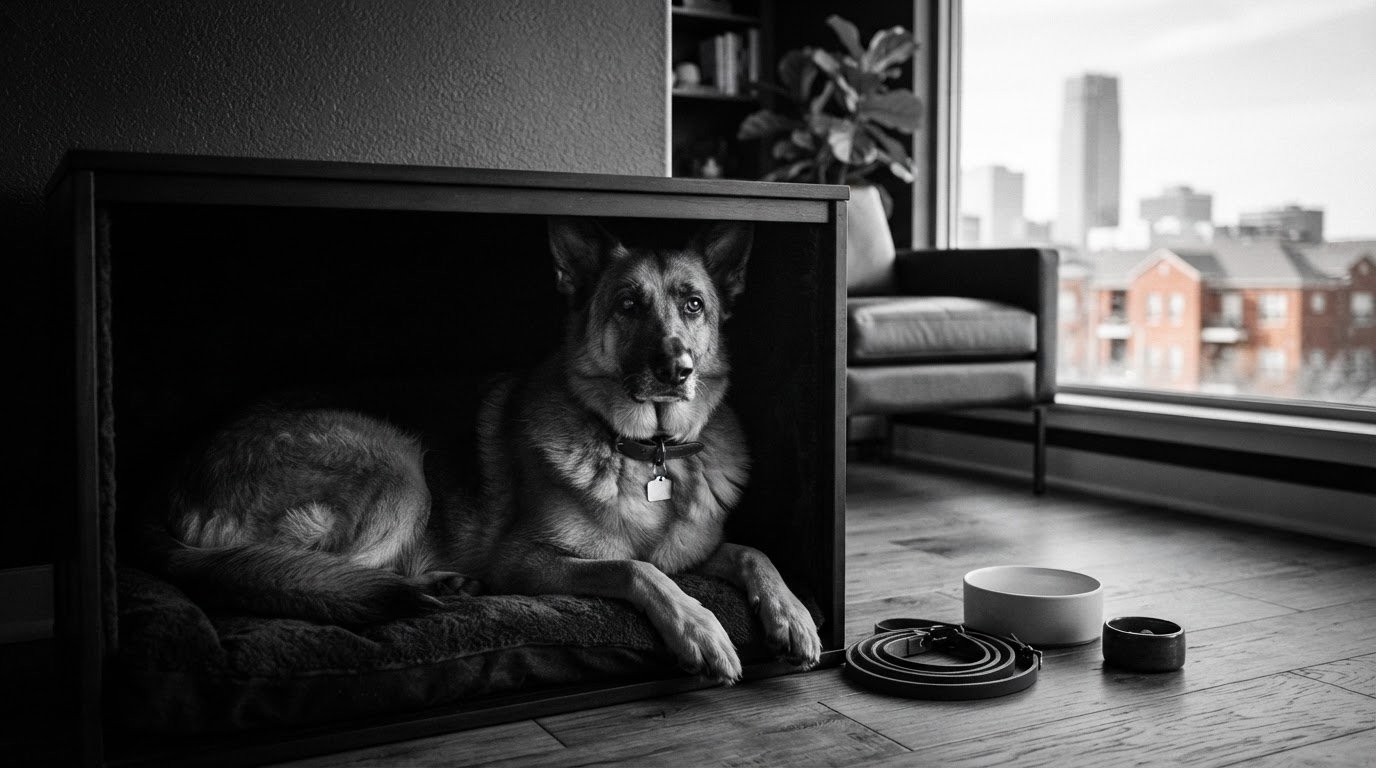
Give your dog a specific alternative. Before cooking begins, guide your dog to a bed or mat away from the counter. Reward calm settling there, then provide an appropriate chew or toy if it helps your dog stay occupied. A crate can also serve as a safe management option when your dog is comfortable using it. The goal is a clear routine: food preparation starts, and the dog moves to an assigned place.
Prevent unsupervised practice. Don’t leave a dog loose in the kitchen when no one can monitor access. If you step away, use a closed door, baby gate, crate, or dog-proof room. Apply the same rule when leaving for a few minutes. Each opportunity to find food can strengthen the behavior, while consistent barriers prevent the dog from rehearsing it.
Respond to stolen food without escalating. If your dog takes an item, avoid reaching into the dog’s mouth unless the item could harm the dog. Confrontation can create a risk of a struggle or bite. For a harmless object, calmly encourage a trade with a duplicate or a safe reward, then practice “drop it” separately with low-value objects. Keep the response steady and predictable.
Act promptly if your dog eats a hazardous item. Grapes, raisins, chicken bones, and chocolate can harm dogs; plastic wrapping can also be swallowed. Contact a veterinarian promptly if your dog eats one of these items or another potentially dangerous object. Share what the dog ate and when, plus any packaging or food details you can identify. Don’t wait for counter-surfing training to address a possible ingestion concern.
How can I prevent my dog from getting on counters and tables?
Build a kitchen plan that accounts for access routes, food storage, and your dog’s habits. If you’re learning how to stop a dog from counter surfing in Oklahoma City, consider the cupboards, drawers, and appliances as well as the counters.
Restrict Access to Kitchen CountersCheck which counters your dog can reach by standing, stretching, or climbing onto nearby furniture. Move chairs, stools, and storage bins that could act as launch points, then reconsider where you place serving trays. If your kitchen connects to a dining area, assess both surfaces as one route. Owners deciding how to stop a dog from counter surfing in Oklahoma City should map these access points before choosing household boundaries.
Use Gates and BarriersPlace a gate across the route your dog actually uses, not just the most convenient doorway. Check the placement from your dog’s side, including nearby furniture or open spaces that could offer another way through. Keep the entrance clear for people carrying hot cookware, and agree on when the barrier should stay closed. A gate works best as part of a consistent household routine, rather than a cue your dog has to interpret.
Prevent Access to Cupboards, Drawers, and AppliancesCheck lower cupboards and drawers for food, utensils, or packaging that might attract your dog. Use child-safety latches where your dog can nose or paw doors open, and store cleaning products separately from food. Close appliance doors fully after use: a dishwasher with food residue or an open trash pullout can invite further searching. Review the setup after unloading groceries and cleaning up meals, when storage is often left open.
Choose Safe Counter-Surfing DeterrentsUse environmental management and reward-based training instead of devices that startle, hurt, or frighten your dog. Avoid unstable objects, sharp items, or anything that could fall if your dog investigates. These setups risk injury and don’t teach a useful alternative. Instead, notice and promptly reward a calm choice, such as staying beside you while you carry a plate. Keep practice controlled and introduce one distraction at a time.
During meal preparation, use a baby gate in the kitchen doorway or place your dog in another room to restrict access. Crating can also prevent your dog from reaching food on the counters.
Counter surfing as a lifelong habit
Plan to keep management in place as part of your routine. Some dogs never outgrow counter surfing, so success means preventing food theft and maintaining reliable household habits.
Keep the prevention plan active. After a dog has found food, a few weeks without success may be needed before the behavior fades. Don’t treat a quiet stretch as proof that the habit has disappeared. Keep food secured and supervise access, especially during familiar situations such as meal preparation, family gatherings, or cleanup.
Track the situations that invite old behavior. Note when your dog approaches counters, such as when groceries arrive or someone leaves a plate behind. Record what happened immediately beforehand and how you responded. Use those observations to adjust the routine, such as securing food before answering the door or assigning the dog a calm activity during cleanup.
Coordinate household responses. Ask everyone who prepares or serves food to follow the same rules. One person leaving a snack unattended can create a new opportunity, while another person’s consistent prevention loses its effect. Agree on where food belongs, which rooms stay closed, and what the dog should do while people eat. Clear roles keep the plan predictable.
Rebuild the routine after changes. A move, visiting guests, or a different kitchen setup can create a new situation for your dog. Walk through the space and identify reachable food, open storage, and routes to tables. Use barriers or supervision while your dog learns the changed environment. Reward calm alternatives, then increase freedom only as the dog follows the routine.
Respond to a setback with a tactical reset. If your dog reaches a counter again, secure food and return to closer supervision. Identify the missed opportunity, then adjust the plan instead of relying on repeated corrections. For example, if the dog searches while dinner is served, block access during that routine and practice settling away from the table. Consistent follow-through helps protect progress over time.
If counter surfing persists despite steady management, Behavior Modification support can help tailor the training plan to your dog and household.
Many dogs never outgrow counter surfing and may continue throughout their lives. Treat your plan as an ordinary part of caring for your dog, not a temporary stage with a guaranteed end. Keep expectations practical: the goal is a home where tempting food stays out of reach and your dog has a clear place to settle while people handle meals. This makes prevention dependable without requiring you to decide that the behavior is gone for good.
Make the routine manageable on busy days, too. Before preparing food, put away anything your dog could reach and set up the calm activity you want them to do. When household routines change, supervise more closely until your dog responds reliably in the new situation. If someone misses a step, close off the opportunity and restore the routine rather than assuming earlier progress is lost. A steady plan helps protect food, reduce conflict, and give everyone at home a consistent response. Adjust the setup to fit daily life so management remains practical over time.
K9Elite: In-Home Evaluation
K9Elite’s In-Home Evaluation helps identify what’s driving counter surfing in your home. A trainer observes your dog’s behavior and environment, including kitchen routines, food access, and the cues your dog already understands. This home field advantage makes it easier to pinpoint where management or training needs adjustment.
Consider an evaluation if your dog keeps reaching for food despite consistent barriers, struggles to settle during meal preparation, or guards stolen items. An evaluation can help shape a plan around practical household routines. Obedience Training can strengthen everyday cues, while Behavior Modification can address persistent or more complex behavior patterns.
For a structured next step toward safer kitchen habits, contact K9Elite to discuss an In-Home Evaluation.
Make Consistency Your Next Step
Long-term progress happens in everyday moments, not just during formal training. Whenever food is served, groceries are unpacked, or guests gather in the kitchen, your dog has another chance to practice the household routine. Make expectations clear to everyone involved, and treat a lapse as useful information about what the plan may need.
For owners working out how to stop dog counter surfing in OKC, the next step is to match training to the real challenges at home. If your dog’s behavior keeps disrupting meals or creating tension around food, K9Elite can help you identify a practical path forward through its training services. Choose a structured plan that supports both safety and a stable relationship with your dog.
Contact K9Elite about dog training and take the next step with a clear mission in mind. Consistent action can make your home routine easier to manage.
Frequently Asked Questions
Why does my dog counter surf?
Food smells, accessible leftovers, and the chance to forage can make counters rewarding to dogs. If your dog finds a piece of toast, they may check that spot again, especially when people are distracted. Look for patterns, such as searching after breakfast or following food from the prep area to the dining table. Those details can help you anticipate counter surfing and adjust your routine.
Why doesn’t your dog understand that this is wrong?
Your dog isn’t making a moral choice when they counter surf. Dogs learn from outcomes: grabbing a sandwich can be rewarding, while a correction after the fact may not clearly connect to the earlier action. Give a specific cue in the moment, then guide your dog toward an alternative. For example, reward them for turning away from a plate or waiting calmly while someone carries food past.
What immediate steps prevent a dog from reaching food on kitchen counters?
Store food in closed containers, clear serving dishes, and keep your dog out of the kitchen when no one can supervise. Check the dining area, too: a low coffee table or a child’s snack plate can be just as tempting as a counter. When guests arrive, assign someone to manage the dog and ask others to keep food and plates out of reach.
How can you teach a dog to go to a mat or settle while food is prepared?
Teach your dog to settle on a mat before adding the activity of cooking. In a quiet room, reward your dog for choosing the mat, then calmly release them to reset. Next, practice with small real-life actions, such as opening a cupboard or moving a clean pan. If your dog leaves the mat, make the task easier and reward a successful return before adding another distraction.
What household management tools help prevent counter surfing, such as gates or crates?
A baby gate or closed door can block kitchen entry; a crate or dog-proof room can provide a separate space while you cook or when nobody can supervise. Choose a setup your dog can use calmly, and make sure gates latch securely and doors cannot swing open. Keep the plan consistent across household members, including during busy moments such as unloading groceries.
Comments