
Group obedience training in OKC for everyday skills
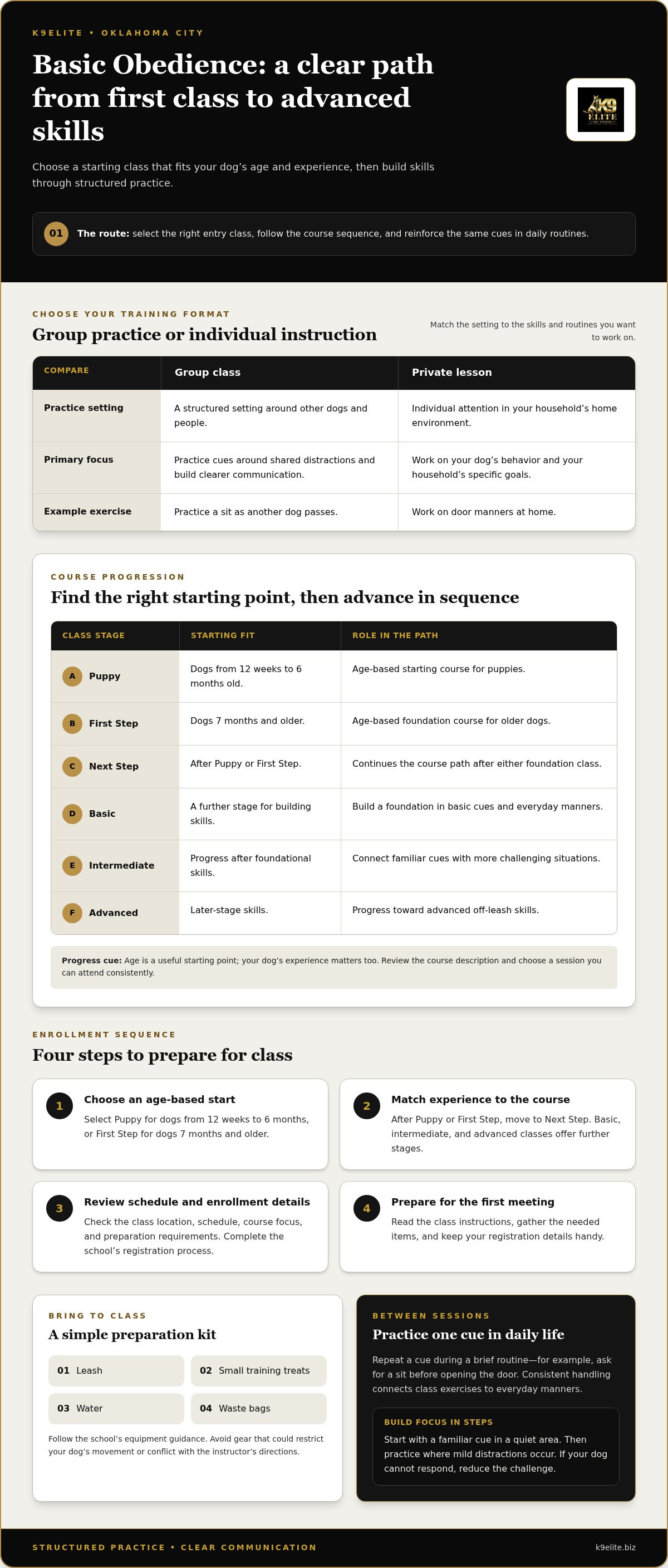
Basic Obedience is the starting point for everyday manners and focus. For group obedience training in OKC, begin by choosing the Basic course, then follow the enrollment steps for the class you want to attend.
Group classes give you and your dog a structured setting to practice around other people and dogs. This helps you build clearer communication in the presence of distractions, while regular practice between sessions supports progress.
This guide explains how to sign up for Basic Obedience and what to expect from small-group training. You’ll see how classes can develop manners and attention, and how training can progress to intermediate work and off-leash skills. The goal is a practical plan: understand the class path, prepare for the first session, and keep reinforcing the skills in daily life.
Table of Contents
How do I sign-up for Basic Obedience class?
To begin Basic Obedience, choose a class that fits your dog’s age and experience, then follow the registration instructions. When comparing group obedience training in OKC, consider the class schedule, course focus, and enrollment steps. Group classes provide structured practice around other dogs and people, while private lessons can focus on your household’s goals and home environment.
Choose a format based on your training goals. In a group class, handlers practice cues around shared distractions. Private lessons offer more individual attention to your dog’s behavior and household routines. For example, you might practice a sit as another dog passes in class, then work on door manners at home through individualized instruction.
Use this sequence to identify the right starting class:
Choose an age-based starting point. Puppy classes are for dogs from 12 weeks to 6 months old. First Step classes are for dogs 7 months and older.
Match experience to the course. After Puppy or First Step, move to Next Step classes. Basic, intermediate, and advanced classes offer further stages for building skills.
Review the schedule and enrollment details. Select a session that fits your routine, then complete the school’s registration process.
Prepare for the first meeting. Read the class instructions and gather the items your dog needs to participate.
Age is a useful starting point, but your dog’s experience matters, too. A young dog with little class experience may suit Puppy instruction, while an older dog may start with First Step. Next Step follows either foundation course. When comparing group obedience training in Oklahoma City, look for a clear progression and guidance on practicing between classes.
Before enrolling, review the course description and participation instructions. Note the class location, schedule, and preparation requirements. Choose a session you can attend consistently, since missing classes can make it harder to follow the course sequence. Keep the enrollment details accessible so you can prepare without rushing.
Bring a leash, small training treats, water, and waste bags. Keep registration details and class instructions handy. Follow the school’s equipment guidance, and avoid adding gear that could restrict your dog’s movement or conflict with the instructor’s directions. Have treats ready, for example, to reward attention during a short practice turn.
Plan how you’ll practice between classes. Repeat one cue during a brief daily routine, such as asking your dog to sit before opening the door. Consistent handling connects class exercises to everyday manners and gives you a clear goal for each practice session.
Confidence, focus, and real-world experiences
Confidence grows through manageable challenges, clear signals, and repeated success. In an Oklahoma City class, your dog might first practice holding attention while another team works nearby. Reward that focus, then repeat the cue with slightly more activity. This gives your dog a clear task without expecting calm behavior in every situation right away.
You can observe focus in your dog’s responses: answering to their name, checking in with you, and returning attention after a distraction. If your dog notices movement across the room, create space, give a familiar cue, and reward them for turning back. Short, successful repetitions build a useful response for sidewalks, parks, and visits with guests.
Build real-world practice in steps. Start with a familiar cue in a quiet area, then practice where mild distractions occur. If your dog can’t respond, reduce the challenge rather than repeating the cue more loudly. Keep a training log of the location, distraction, cue, and response. These details help you choose the next step.
A trainer’s experience is valuable when it leads to clear instruction and appropriate adjustments. A skilled instructor can demonstrate a cue, observe your timing, and explain how to reinforce the desired response. If your dog pulls toward another team, for instance, the instructor can help you regain your dog’s attention before moving closer. This keeps the exercise purposeful and structured.
Trainers who continue learning can refine their methods as behavioral knowledge develops. A responsible professional should explain the purpose of an exercise and show how it applies beyond class. During a lesson, notice whether the trainer identifies the behavior, demonstrates a response, and guides you through practice. Clear feedback makes each repetition more useful.
Training is a team effort. Your dog learns the cue, you practice consistent timing, and the instructor provides direction. At home, reinforce the same response in everyday situations, such as asking for attention before opening the front door. Consistency between you, your dog, and the instructor helps make class skills useful in daily routines.
Choose practice goals you can observe, such as a calm check-in while another dog moves nearby. Record what helped, then continue with that setup before adding difficulty. For structured help applying obedience skills to daily routines, explore professional dog training guidance.
Intermediate and off-leash advanced skills
Intermediate work connects familiar cues with more challenging situations. A dog that sits in a quiet room can practice holding the position while you change direction or another team moves nearby. The goal is controlled behavior, not speed. Move forward when your dog responds reliably in the current setting.
Leash walking improves when you reward a specific position. Choose a side, keep the leash loose, and reward your dog for staying near your leg. If your dog moves ahead, pause and regain their attention before continuing. Start with a short stretch on a quiet sidewalk before adding people or moving dogs.
Heel training calls for closer attention than ordinary walking. Give a clear cue, take a few focused steps, then reward your dog beside you. Add turns once your dog understands the position. Changing your pace or direction can make the exercise more challenging without pulling your dog into place.
Build a useful walking routine with these steps:
Begin with attention. Say the dog’s name once, then reward an orientation toward you.
Practice loose-leash movement. Take a few steps and reinforce the dog for remaining beside you.
Introduce distractions gradually. Increase distance from other dogs when your dog cannot respond calmly.
End with a clear success. Finish after a focused repetition, not after a prolonged struggle.
Recall asks your dog to leave an activity and return to you. Start in a secure, enclosed training area with few distractions. Give the recall cue once, move away to invite your dog to follow, and reward them when they reach you. Then release them to resume the exercise, so returning doesn’t always end exploration.
Practice off-leash obedience only after your dog has reliable recall and focused leash skills. Training without a leash in an unsecured public space creates avoidable risk. Use a secure area, keep early exercises brief, and add distractions gradually. If your dog ignores the cue, make the setup easier before trying again.
Intermediate and advanced training should match your dog’s behavior, not just your preferred pace. A dog that pulls toward every passing dog needs more controlled leash practice before heel work around busy distractions. A dog that returns promptly in a quiet enclosure can practice recall with a new, mild distraction. Strengthen the cue, test it under controlled conditions, and add difficulty only when your dog stays responsive.
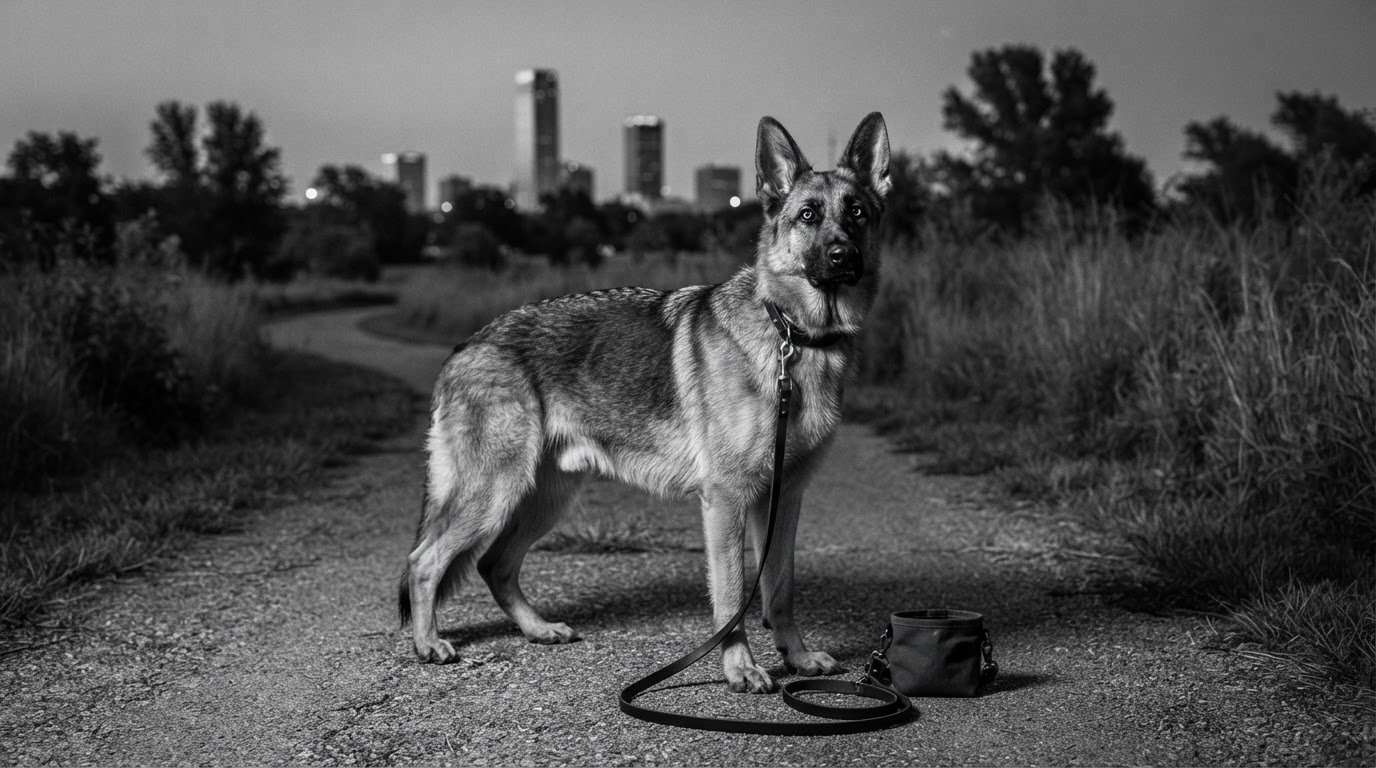
Small-group obedience and basic manners
Small-group practice lets your dog work around other teams. Use clear cues, steady handling, and repetition to strengthen everyday manners.
Basic Commands and Manners
Basic obedience often focuses on practical cues such as sit, down, stay, come, and leave it. Look for instruction that connects each cue to a daily task, such as asking your dog to sit before greeting a visitor. Recall matters, too: call your dog from a short distance and reward the return. This routine supports focus and a stronger relationship.
Class Size and Course Length
Class size depends on enrollment and the instructor’s ability to coach participating teams. Ask how the class balances instruction and practice, including whether handlers receive feedback while dogs wait or work. Basic and Intermediate courses run for five weeks; the Advanced course runs for six weeks. Use these durations to plan attendance and practice between sessions.
Small-group classes give dogs a structured opportunity to notice other dogs, people, and movement while staying engaged with their handlers. For example, your dog can practice a down while another team walks past at a manageable distance. If your dog loses focus, create more space, regain their attention, and repeat the exercise at an easier level.
Basic manners improve when each cue has a consistent meaning. Choose one recall word, reward the response, and avoid repeating the cue while your dog is distracted. At home, practice “come” from one room before trying it across a busy yard. Keep the sequence clear: cue, response, reward.
Greeting: Ask for a sit before opening the door to a visitor.
Walking: Reward a loose leash when your dog stays beside you.
Impulse control: Use “wait” before setting down a food bowl.
Recall: Call your dog from a short distance, then reward arrival.
Course length matters when you can attend regularly and practice consistently. Mark each class on your calendar, then repeat one assigned skill during a daily routine. For instance, practice “stay” while preparing a meal, then release your dog with a clear cue. A simple training note can track the exercise, location, and response.
Choose a class whose instruction matches your dog’s behavior and your goals. A dog that struggles to settle near other teams may need more distance during practice. A dog that responds reliably to basic cues can work toward longer stays and more distractions. The right progression gives each team a manageable next step.
Oklahoma City service area
Local training is most useful when class practice connects with the places your dog visits regularly. In Oklahoma City, consider your home, the training location, and familiar public settings. Planning around these places helps skills carry over into daily routines instead of staying limited to one room.
The greater Oklahoma City service area includes Edmond, Moore, Norman, and Midwest City. Consider travel to class and places to practice close to home. For example, a household in Moore can choose a quiet nearby route for leash practice, then work toward busier surroundings as the dog stays focused.
Distance is only one factor. Consider your dog’s behavior during travel, your schedule, and whether you can attend consistently. If you live in Norman, for example, choose a session that fits your weekly routine and set aside regular time for short practice at home. A repeatable schedule makes training easier to maintain.
Use familiar settings to connect class skills with daily life. Practice a sit before opening the front door, recall in a secure area, or loose-leash walking on a quiet neighborhood route. Once your dog responds reliably, gradually introduce a more distracting public setting. Keep enough distance when another dog or passerby interrupts their attention.
Oklahoma City owners can plan local practice with a simple sequence:
Mark the regular routes. Note where your dog walks, rests, and meets visitors.
Select one skill for each setting. Practice recall in a secure space and leash manners on a familiar route.
Track the conditions. Record the location, distraction, and response after each session.
Adjust the next exercise. Add difficulty only when your dog can respond at the current level.
These steps help distinguish a location challenge from a skill gap. If your dog responds indoors but loses focus near a busy sidewalk, increase the distance from activity and start with an easier cue. Match the exercise to the setting, then progress gradually. A familiar route in Edmond or Midwest City can be a practical starting point before trying a busier public environment.
For an individualized plan that accounts for your Oklahoma City household and surroundings, take the next step with local training.
K9Elite: In-Home Evaluation
K9Elite’s In-Home Evaluation gives owners a structured assessment of their dog’s behavior, triggers, and home environment. It can help clarify whether group practice fits the dog’s current needs or whether behavior concerns call for individualized guidance.
During an in-home evaluation, the trainer can observe how your dog responds in familiar surroundings and identify communication gaps. That context helps shape next steps, whether your goal is Obedience Training, Behavior Modification, or Therapy Dog Training. If you’re preparing for a therapy dog role, discuss the skills and handling it requires.
Choose an in-home evaluation when barking, reactivity, or difficulty following cues at home interferes with everyday routines. Contact K9Elite to discuss an evaluation and the training path that fits your goals.
Put the next training step into practice
Start with one everyday behavior, such as settling before a walk or responding to a recall cue. Set a simple practice routine and use the same cue and expectation across your household. If you’re considering group obedience training in OKC, decide whether a class suits your dog’s current needs or whether individual guidance would better address behavior at home.
K9Elite offers Obedience Training and Behavior Modification to address different training goals. An In-Home Evaluation can help identify behavioral concerns and clarify a practical direction for training. The next step is to describe the behavior you want to change and the situations where it occurs.
Contact K9Elite about group classes and take the next step toward clearer communication with your dog.
Frequently Asked Questions
What will you learn?
Learn to guide your dog through everyday situations with clear cues and consistent handling. For example, ask for attention before greeting a visitor, then reinforce calm behavior as the guest enters. Class also gives you a chance to assess your timing and adjust your response. Practice one skill at home each day to make training part of your routine.
Why Does My Dog Need Obedience Training?
Obedience training gives you practical ways to communicate expectations and manage daily behavior. A dog that responds to “stay” can wait while you bring groceries inside, while reliable recall supports controlled practice. Training also helps you reinforce desired behavior, rather than reacting only after problems arise. Choose goals that fit your household’s routines and practice consistently.
What dog training facilities offer group obedience classes in Oklahoma City?
K9Elite offers group classes in Oklahoma City alongside its obedience training. A group setting lets handlers practice cues while other teams are present, which can help prepare dogs for distractions beyond the home. Consider whether your dog can remain engaged around unfamiliar people and dogs. If behavior concerns interfere with participation, an In-Home Evaluation can help identify the next suitable training step.
What obedience skills and commands are covered in OKC group dog training classes?
Common foundation skills include sit, down, stay, recall, and loose-leash walking. Class exercises let you practice these cues around distractions, such as another dog moving nearby. Find out which skills the course emphasizes and how to practice between sessions. For example, use “wait” before opening a door, then release your dog with a consistent cue.
What are the age, vaccination, and behavior requirements for joining a group dog training class in OKC?
Age placement can follow the dog’s development and training history: puppy classes are for dogs from 12 weeks to 6 months, while First Step classes serve dogs 7 months and older. Vaccination and behavior requirements depend on the class’s participation rules. A dog that lunges, growls, or cannot settle near other dogs may need an individual behavior assessment before group work.
Where and when are group obedience classes held in Oklahoma City?
Group classes are available in the Oklahoma City area. Meeting locations and session dates depend on the scheduled course. Before enrolling, consider your travel route, weekly routine, and where you want your dog to use new skills. A class near familiar walking routes can make it easier to continue practicing leash manners after instruction.
How can I choose a qualified dog trainer in Oklahoma City?
Look for a trainer who explains the purpose of each exercise, demonstrates handling clearly, and adjusts training to the dog’s behavior. K9Elite uses science-based, balanced methods and the exclusive ANCHOR System, a structured framework for communication, accountability, and owner education. Founder Coty Cortez is a Marine Corps veteran and career dog trainer. K9Elite’s mission is to empower dog owners with the skills and confidence to lead their dogs effectively, keep more dogs out of shelters, and build strong, reliable partnerships between dogs and their families.
Comments