
In-Home Puppy Training Oklahoma City: Build Skills
A puppy doesn’t learn household rules from advice alone. The real test comes when the doorbell rings, mealtime begins, or a familiar routine gets interrupted. K9Elite brings in home puppy training Oklahoma City families can practice in the spaces and situations where habits form. It can be difficult to know which behaviors to address first, especially when general training tips are hard to apply consistently at home.
A structured plan gives you clear priorities and a practical way to keep building skills between sessions. Training at home can address everyday routines and behavioral triggers, while owner participation supports consistent practice. K9Elite’s veteran-led, science-based approach uses the ANCHOR System to guide communication, accountability, and relationship-building. The mission is not a quick fix. It is a clear next step toward foundational habits you can continue reinforcing at home.
Table of Contents
Oklahoma City Puppy Training: Start With Routines
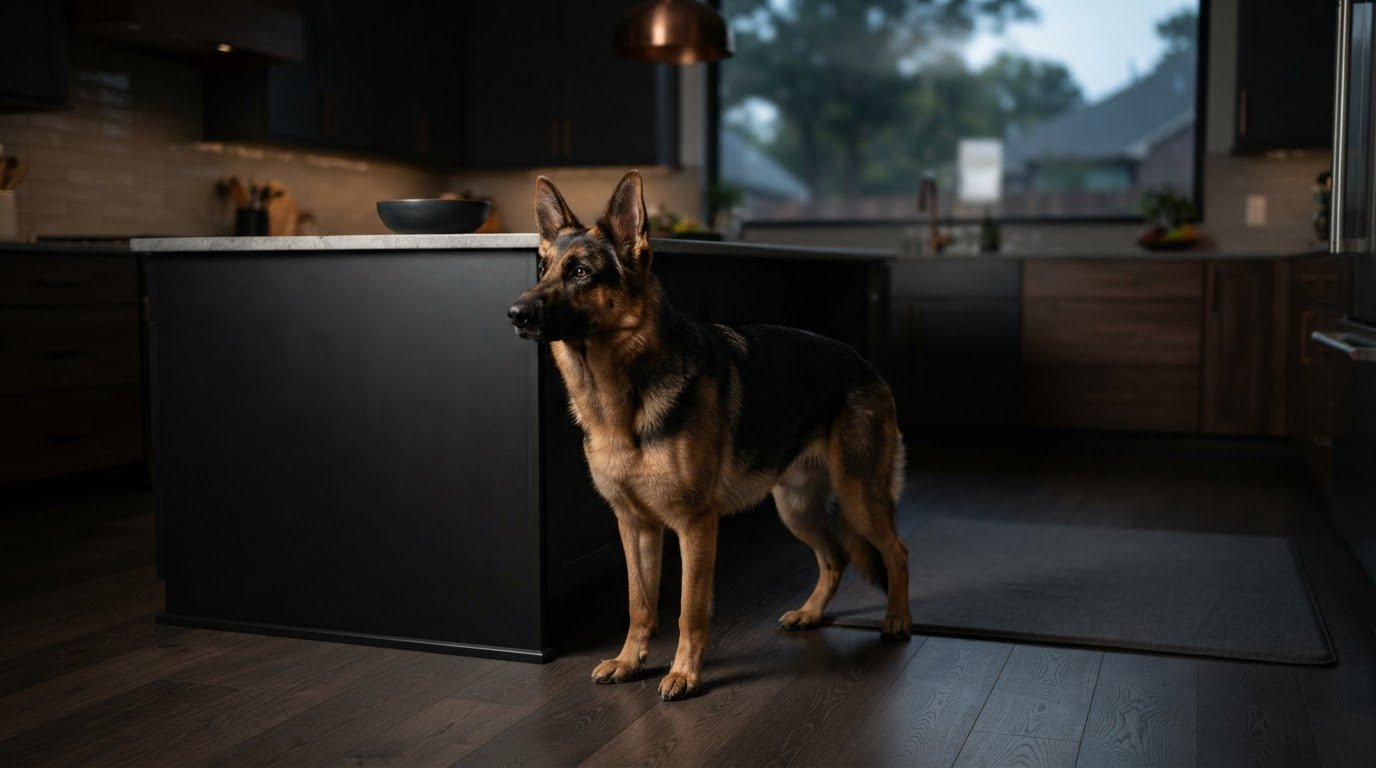
In-home puppy training takes place in the puppy’s everyday environment, where household routines provide the setting for practice. Rather than working on a cue only in an unfamiliar space, the owner and trainer can observe how the puppy responds to familiar people, sounds, doorways, and transitions. That context helps shape priorities around the situations the household actually faces.
Home field advantage means “Training the dog in its own environment to identify and address specific triggers.” The setting offers useful information, not a guarantee of progress. Learning still depends on appropriate steps, clear cues, and consistent practice. These principles of dog training are most useful when owners apply them to specific moments in their daily routines. In home puppy training Oklahoma City families can practice at home makes those moments part of the training plan.
Which early puppy habits benefit from training at home?
Start with routines that happen often. Select one priority, decide what response you want to encourage, and practice when the situation is manageable. Examples include:
Calm greetings: Before visitors enter, prepare a defined place for the puppy to wait. Reward calm attention instead of allowing an excited approach to become the default greeting.
Settling: During a household pause, such as after play or while the family sits down, guide the puppy toward a resting spot and reinforce quiet behavior.
Leash handling: Before a walk, practice attaching the leash and moving a few steps indoors. This lets the puppy practice the departure routine before outdoor distractions enter the picture.
Household boundaries: At a doorway or near an off-limits area, use the same cue and response each time. Consistency helps everyone communicate the boundary clearly.
These are possible starting points, not a fixed checklist. Choose the routine causing the most disruption or uncertainty, then build from there.
How the home environment reveals behavioral triggers
A puppy may bark when a door opens, pull toward a family member crossing the room, or become restless as the household prepares to leave. Those are observable responses. On their own, they do not prove the puppy is stubborn, protective, or deliberately disobedient. A trainer considers what happened immediately before the behavior, what the puppy did, and what followed.
Sounds, movement, doorway traffic, and transitions between activities can all affect a puppy’s response. An in-home observation can help identify whether a particular sound, location, or sequence of events is associated with the behavior. Note the time, setting, and events just before a concern appears. That record gives training a tactical starting point: identify the context, select one behavior to work on, and practice with clear, repeatable cues. If the puppy struggles, adjust the setup so practice stays manageable.
How Structured In-Home Puppy Training Builds Reliable Foundations
Reliable foundations come from a repeatable plan, not a string of commands delivered only when a problem appears. In home puppy training Oklahoma City owners can apply starts by observing the puppy in a familiar setting, choosing one skill, and practicing it in a manageable household situation. The trainer adjusts the setup to the puppy’s response, while the owner learns how to continue the work between sessions.
A practical sequence keeps the mission clear:
Observe: Notice what the puppy does, what happens just before, and what follows. This gives the trainer useful context before selecting a goal.
Choose one skill: Set a specific target, such as responding to a cue or settling briefly, rather than trying to teach several behaviors at once.
Set up realistic practice: Begin in a familiar, lower-distraction part of the home, then work toward the routine where the skill is needed.
Repeat and adjust: Use the same cue and response. If the puppy becomes distracted or confused, make the exercise easier and try again.
Short, consistent practice makes the plan easier to repeat. Science-based, balanced training pairs clear communication with suitable reinforcement and manageable expectations. For broader context on early obedience foundations, Hill’s overview of puppy obedience training essentials discusses areas such as socialization and crate training.
Structured practice teaches a puppy what to do. Repeated, unplanned correction only reacts to what just happened.
What does a mission-driven puppy training session involve?
A mission‑driven structure organizes a session into briefing, assessment, active work, and debrief. First, the owner identifies a routine or skill to address. The trainer observes the puppy and the setting, demonstrates a clear cue, and guides the owner through practice. For example, the owner might rehearse a brief “come” cue from a few steps away in a quiet room. During the debrief, the owner reviews what worked and how to practice the cue consistently.
The owner is an active participant, not a spectator. Handling the leash, delivering cues, and repeating the routine during the session helps the owner learn the timing and sequence to use later.
How the ANCHOR System supports consistent communication
The ANCHOR System brings together accountability, leash navigation, communication, emotional harmony, owner education, and relationship-building. In puppy training, these elements help align the owner’s cues and handling with the skill being practiced. A consistent word, clear follow-through, and calm guidance give the puppy a more predictable learning picture.
Owner education connects a session to daily life. The trainer explains how to practice, what to observe, and when to simplify the exercise. The framework supports the plan, while the owner’s participation and repeatable practice keep the work moving between sessions. To explore how K9Elite structures in-home puppy training around owner involvement, review the service details.
What Oklahoma City Puppy Owners Should Expect From Home-Based Practice
Your puppy doesn’t need to behave perfectly before structured training can begin. Training is where the owner and puppy learn cues, routines, and responses that support better behavior. Expect progress to be gradual and specific to the puppy, the skill being taught, and the household’s ability to practice consistently. In home puppy training Oklahoma City owners can apply should make the next step clear, not demand flawless performance from the start.
Learning depends on repetition with predictable cues. If one person says “come” while another uses a different word for the same response, the puppy receives mixed information. Agree on simple language and shared expectations before practicing. Keep sessions manageable, reinforce the response you want to encourage, and adjust when the puppy is not ready for a harder version of the skill.
Avoid flooding, which means overwhelming a reactive dog with too many stimuli at once and can contribute to shutdown or escalation. The goal is not to test how much distraction the puppy can endure. Set up practice so the puppy can notice the cue and respond, then increase difficulty gradually with suitable guidance.
How owners can reinforce a new skill between sessions
Use the agreed cue during a familiar routine, such as asking for a brief pause before opening a door. Practice the same way each time so the puppy can recognize what the cue means. Household members should coordinate their words and expectations. Consistency across people makes the plan easier to follow.
Keep a simple record between sessions. Note the situation, the cue, the puppy’s response, and any detail that seemed to affect the outcome. Bring questions and patterns to the next training session. This gives the trainer useful information and helps you focus on the next tactical step instead of guessing.
How to respond when a puppy becomes distracted
If the puppy loses focus, reduce competing distractions before increasing difficulty. Move farther from the activity, choose a quieter spot, or simplify the request. Use calm redirection and a clear cue, then give the puppy an opportunity to respond. Avoid punishment. It does not explain the behavior you want instead.
Progress may mean responding to a cue in a quieter room before responding near household activity. That is useful information, not failure. Keep practice appropriate to the puppy’s current ability, and discuss repeated difficulty with the trainer so the plan can be adjusted. If biting is a separate concern, K9Elite’s puppy biting training guide covers that issue in more detail.
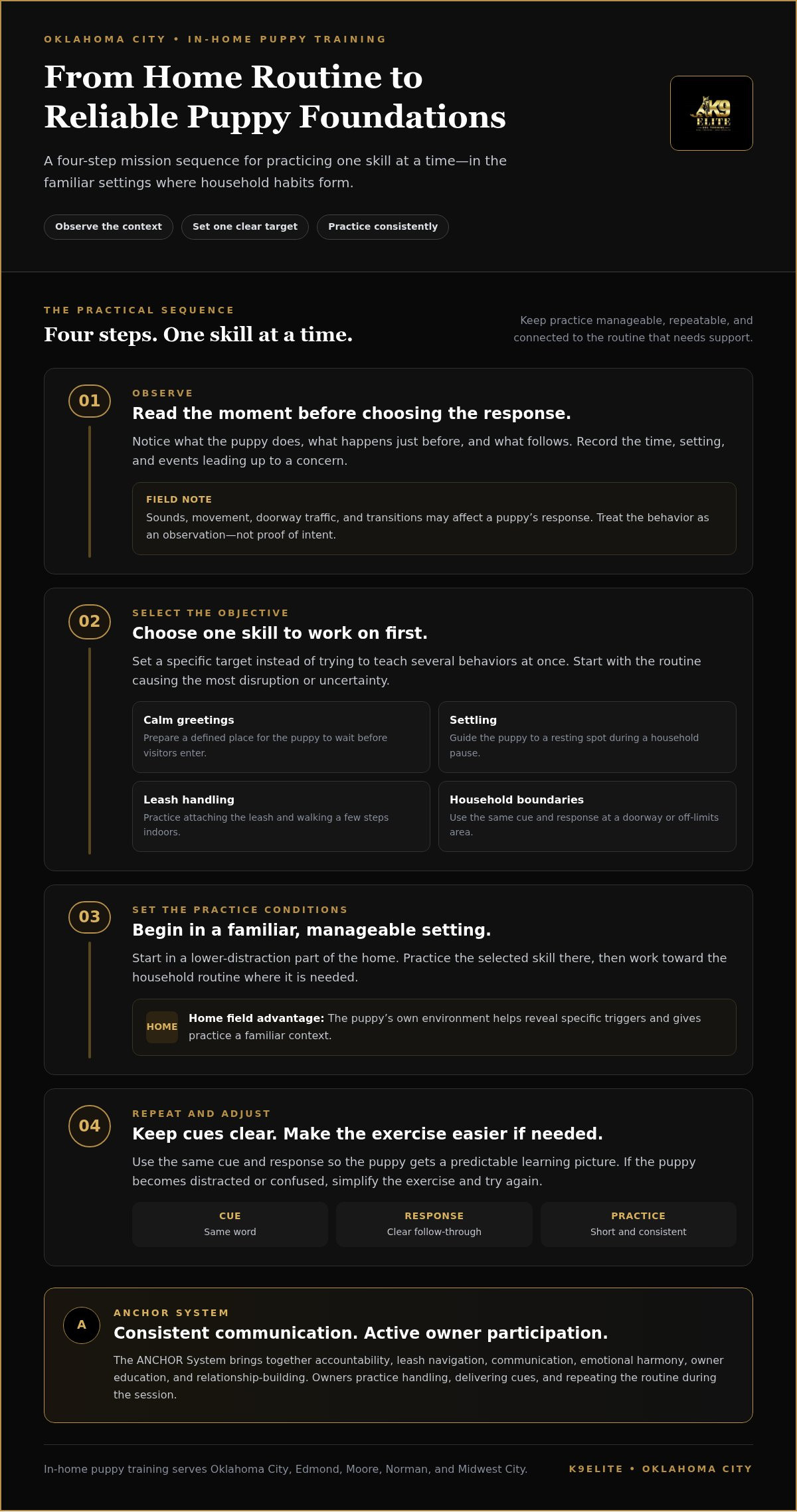
A Practical Starting Plan for Puppy Training in Oklahoma City Homes
A useful first session starts with clear information about your puppy’s everyday life, not a long list of goals. Before in-home training, identify the routines that feel difficult, note when behavioral triggers appear, and write down what happens immediately beforehand. This gives the trainer a practical starting point and keeps the plan focused on the puppy and household, rather than assumptions about why a behavior occurs.
Prepare for the session by choosing priorities, recording routines and behavior patterns, and bringing questions about the situations you want to improve.
Choose priorities: Name the skills you most want to strengthen, such as responding to a cue, settling, or handling a daily transition. Focus on the concerns that affect your household most.
Record the routine: Note when the behavior happens, where the puppy is, who is present, and what took place just before. Include recurring household transitions and changes in activity.
Prepare questions: Ask what cue to use, how to practice it, and what to do if the puppy becomes distracted. Keep questions tied to training goals and everyday handling.
What to note before an in-home puppy session
Keep your notes brief and factual. For example, record that the puppy vocalizes when activity begins near a doorway, rather than labeling the puppy as difficult. Note the routine, the puppy’s observable response, and what happened next. This record helps the trainer assess the situation in context. You don’t need to collect private household information unrelated to the puppy’s training priorities.
Bring your notes even if the pattern seems inconsistent. A behavior that occurs only during a particular transition can still help clarify where practice should begin.
How to keep home practice manageable
Choose one or two clear priorities at a time. Use the cue agreed on with the trainer, and repeat it consistently during suitable daily practice. A structured approach makes it easier for each household member to understand the same expectation and follow the same sequence. Avoid adding several new cues or changing the routine while the puppy is still learning the current step.
Adapt the exercise to the puppy’s response and the trainer’s direction. If the puppy struggles to focus, simplify the setup rather than pressing ahead. Record what changed and share that observation at the next session. Small, specific adjustments keep practice clear and relevant to your home.
For in home puppy training Oklahoma City owners can shape around their own household, K9Elite provides in-home training across the metro area. Use your notes and priority list to plan your in-home puppy training with a clear starting point.
How K9Elite Supports In-Home Puppy Training Across Oklahoma City
Effective puppy training should make sense in the home where the puppy’s routines unfold. K9Elite provides veteran-led, science-based in-home training for Oklahoma City families. With over 15 years of hands-on training experience, K9Elite focuses on clear communication, practical owner education, and a plan shaped around the puppy’s behavior and household environment.
That in-home focus lets owners work on real routines rather than relying only on practice in an unfamiliar setting. The trainer can observe the puppy’s responses in context, help the owner identify priority skills, and demonstrate how to carry the plan into daily life. Progress depends on consistent practice and owner participation, not a promise of instant results.
What an in-home evaluation helps identify
A professional evaluation looks at the puppy’s observable behavior, behavioral triggers, communication between puppy and owner, and the home environment. The trainer considers what happens before and after a response, along with the routines and settings where it occurs. This behavioral assessment helps distinguish what the puppy is doing from assumptions about the reason behind it.
Based on those observations, the trainer develops a mission plan for the puppy and household. The plan can set practical priorities, clarify cues, and show how the owner can practice skills in relevant routines. Begin with a dog training evaluation in Oklahoma City to put the first steps on a clear footing.
How owners continue building skills with K9Elite
Owner coaching connects instruction to repeatable action. During training, owners learn how to give cues, guide the puppy through a routine, and adjust practice when the puppy is distracted or uncertain. Afterward, owners can apply those steps in everyday situations and keep track of questions or patterns to discuss as training continues.
K9Elite also provides lifetime support, meaning ongoing assistance and resources after training sessions conclude. That continued guidance helps owners maintain a structured approach as household routines change and new questions arise. It supports the owner’s role in training without replacing consistent practice.
For in home puppy training Oklahoma City families can put into practice in their own environment, take a practical next step with K9Elite. Explore K9Elite’s in-home training services and start building a clear plan for your puppy and household.
Put Your Puppy’s Next Training Step Into Motion
Training should keep pace with the life you share with your puppy. As a routine becomes more familiar, practice the same clear communication in a slightly different setting, without rushing ahead or changing the cue. Steady progression helps turn a practiced skill into one the household can rely on in everyday situations.
Choose one behavior you want to strengthen next. Notice where it matters most, then plan to practice it consistently with suitable guidance. If the puppy’s response changes, treat that as useful information and adjust the approach rather than abandoning the mission. Clear leadership grows through calm, repeatable choices.
For in home puppy training Oklahoma City families can shape around their actual routines, take a practical next step with K9Elite. Explore in-home puppy training with K9Elite and begin building a plan that supports your puppy’s learning and your household’s goals.
Frequently Asked Questions
When can a puppy start in-home training?
The right time to discuss in-home training depends on the puppy and the skills the owner wants to build. You don’t need to wait for the puppy to master basic cues before seeking guidance. Consider which household routines need support, such as settling during family activity or responding to a name. A trainer can help set priorities based on the puppy’s behavior and home environment.
Can a puppy learn basic obedience at home?
Yes, puppies can practice foundational obedience skills at home, including responding to their name, coming when called over a short distance, and pausing before moving through a doorway. Choose a quiet starting point and reinforce the response you want to strengthen. As the puppy becomes familiar with the cue, practice in another appropriate room so the skill isn’t tied to just one location.
How often should I practise puppy training at home?
Build practice into ordinary parts of the day rather than relying on one long lesson. For example, ask for a simple response before setting down a meal or opening an interior door. Stop while the puppy can still engage, then return to the skill during another routine. Follow the trainer’s guidance on session length and frequency, since the right plan depends on the puppy and household.
What should I do if my puppy gets distracted during training?
Pause and make the exercise easier. Move away from the competing activity, shorten the distance, or return to a cue the puppy understands well. Give the cue once, then allow time for a response instead of repeating it rapidly. If the puppy does not refocus, end that attempt calmly and try again in a quieter moment. Note what drew the puppy’s focus for the next session.
Is in-home puppy training suitable for a first-time dog owner?
Yes. In home puppy training Oklahoma City first-time owners can use provides coaching in the setting where daily decisions happen. A trainer can demonstrate how to give a cue, guide a routine, and recognize the puppy’s response, then help the owner practice those steps. Bring questions about situations that feel uncertain, such as greetings or transitions. The goal is to build the owner’s skill along with the puppy’s.
Can in-home training help with puppy biting?
In-home training can address how biting fits into a puppy’s daily interactions and help owners practice a consistent response. Note when it tends to happen, what activity came just before, and how people respond. Avoid turning the moment into rough play or escalating the interaction. Because biting needs situation-specific guidance, review K9Elite’s puppy biting training guide for additional direction.
What areas near Oklahoma City does K9Elite serve for in-home training?
K9Elite’s in-home training serves the greater Oklahoma City metro area, including Edmond, Moore, Norman, and Midwest City. A home session lets the trainer see the puppy’s everyday setting and coach the owner around household routines. To prepare, note the room or situation where you want support and the skill you hope to practice there. This helps focus the session on your puppy’s needs.
Comments