
Large Dog Obedience Training in OKC: Owner's Guide
A large dog doesn’t need louder commands. Reliable everyday obedience comes from clear communication, consistent practice, and skills that hold up beyond a training session. For owners seeking obedience training for large dogs OKC, the real test is whether the dog can walk without pulling, greet people without jumping, and respond when distractions compete for attention.
These challenges can make ordinary outings stressful, especially when you’re unsure whether private in-home training or a group class is the right fit. A useful plan builds practical control without relying on harsh or punitive methods. Start by identifying your dog’s behavior and choosing a setting where you can practise the situations that matter.
This guide explains how to build dependable obedience with a large dog, compare in-home training with group classes, and choose practical next steps in Oklahoma City. You’ll also learn how a professional evaluation can identify behavioral triggers and shape a mission plan, giving practice structure and helping your skills develop at home.
Table of Contents
Why Large Dogs Need Practical Obedience Training in Oklahoma City
Obedience is not a stack of commands performed in a quiet room. It is clear, repeatable communication that helps a dog and owner navigate everyday situations together. The principles of dog training include teaching behaviors through consistent cues and responses. For obedience training for large dogs OKC, the mission is to carry those skills into neighborhood walks, visits from guests, and shared public spaces.
A larger, stronger dog can be harder to manage when a cue is missed or leash guidance comes too late. That does not mean the dog is automatically difficult, or that size predicts temperament. It means timing and predictable handling matter. Give a cue before the dog reaches the open doorway, and guide the leash before pulling builds momentum. Clear routines help owners respond deliberately instead of reacting under pressure.
Which everyday challenges should training address?
Start with observable behaviors, not broad labels such as “stubborn.” Pulling, jumping on visitors, rushing through doors, and responding inconsistently are specific training goals. Practise one at a time and note the setting, what happened just before the behavior, and how the dog responded. This record can reveal patterns in your dog’s behavioral triggers.
Some needs fit ordinary obedience practice; others call for a closer behavioral assessment. If your dog’s response involves intense fear, aggression, or a safety concern, don’t treat it as a simple manners issue. K9Elite can assess the behavior and its context to help determine the next steps.
What does reliable obedience look like outside a class?
Reliability means the dog responds consistently in familiar situations, then maintains the skill as conditions change gradually. A dog that waits at the front door during a quiet practice can learn to do so when a visitor arrives, with appropriate distance and support. Strengthen the pattern by using the same cue, allowing time for the response, and following through calmly.
Keep practice manageable. If the dog loses focus, reduce the distraction or return to an easier setting rather than repeating the cue louder. The veteran-led master dog obedience guide offers further direction on structured communication and practical obedience. Consistency is the standard: give a clear signal, allow the dog a fair chance to respond, and keep the next step predictable.
Core Obedience Skills That Improve Control With a Large Dog
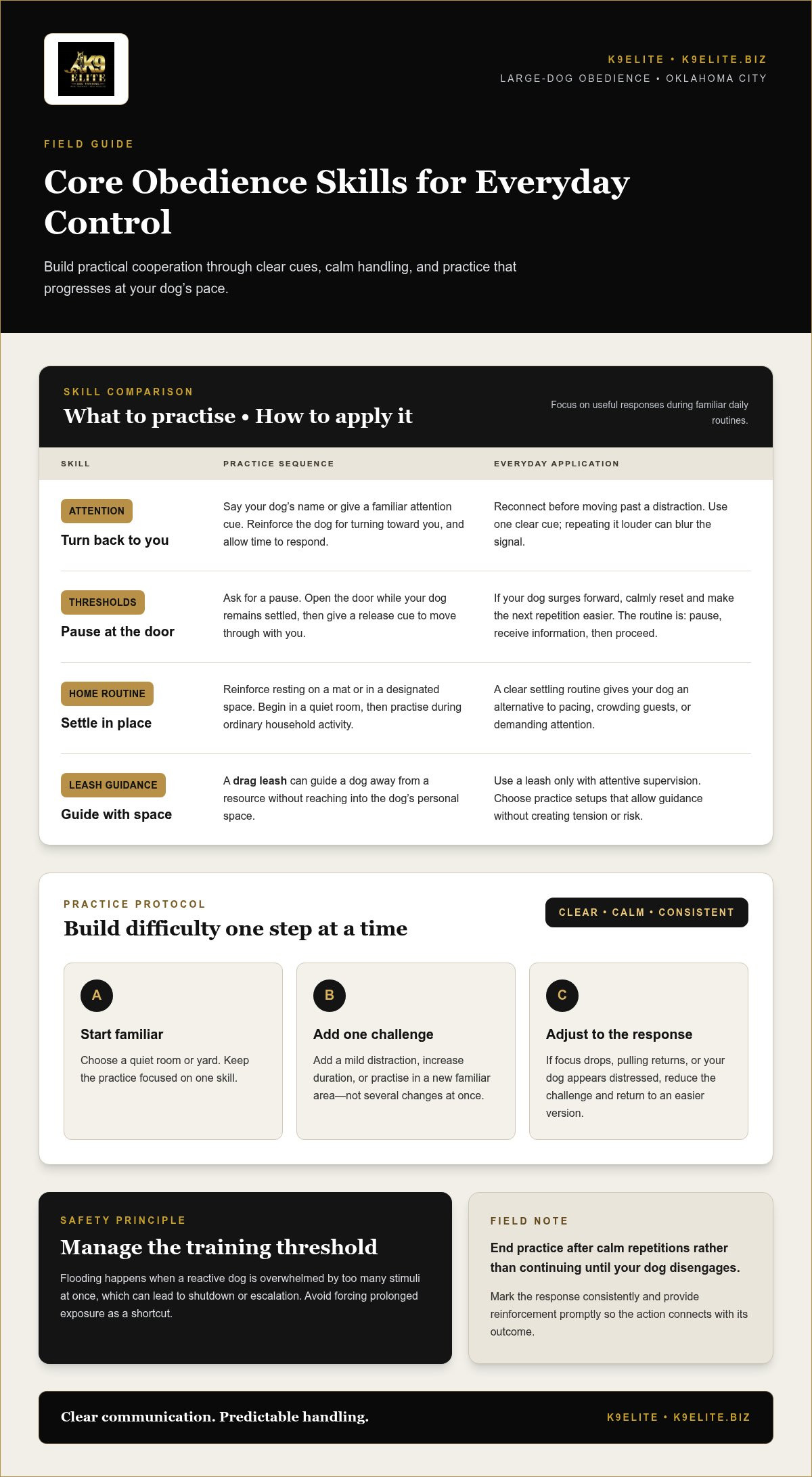
Foundational obedience is a set of practised responses that helps you communicate safely and clearly with your dog during daily routines. The goal is not to collect commands. It is to build predictable cooperation: the dog moves with you on leash, pauses when asked, settles at home, and orients back to you when attention shifts.
Which foundational skills support everyday handling?
Begin with a response to you. Practise saying your dog’s name or giving a familiar attention cue, then reinforce the dog for turning toward you. On leash, this response gives you a way to reconnect before moving past a distraction. Use one clear cue and allow time for the dog to process it. Repeating the command louder can blur the signal rather than clarify it.
Waiting at a doorway is a routine, not a test of dominance. Ask the dog to pause, open the door only while the dog remains settled, then give a release cue to move through with you. If the dog surges forward, calmly reset and make the next repetition easier. This sequence teaches a useful pattern: pause, receive information, then proceed.
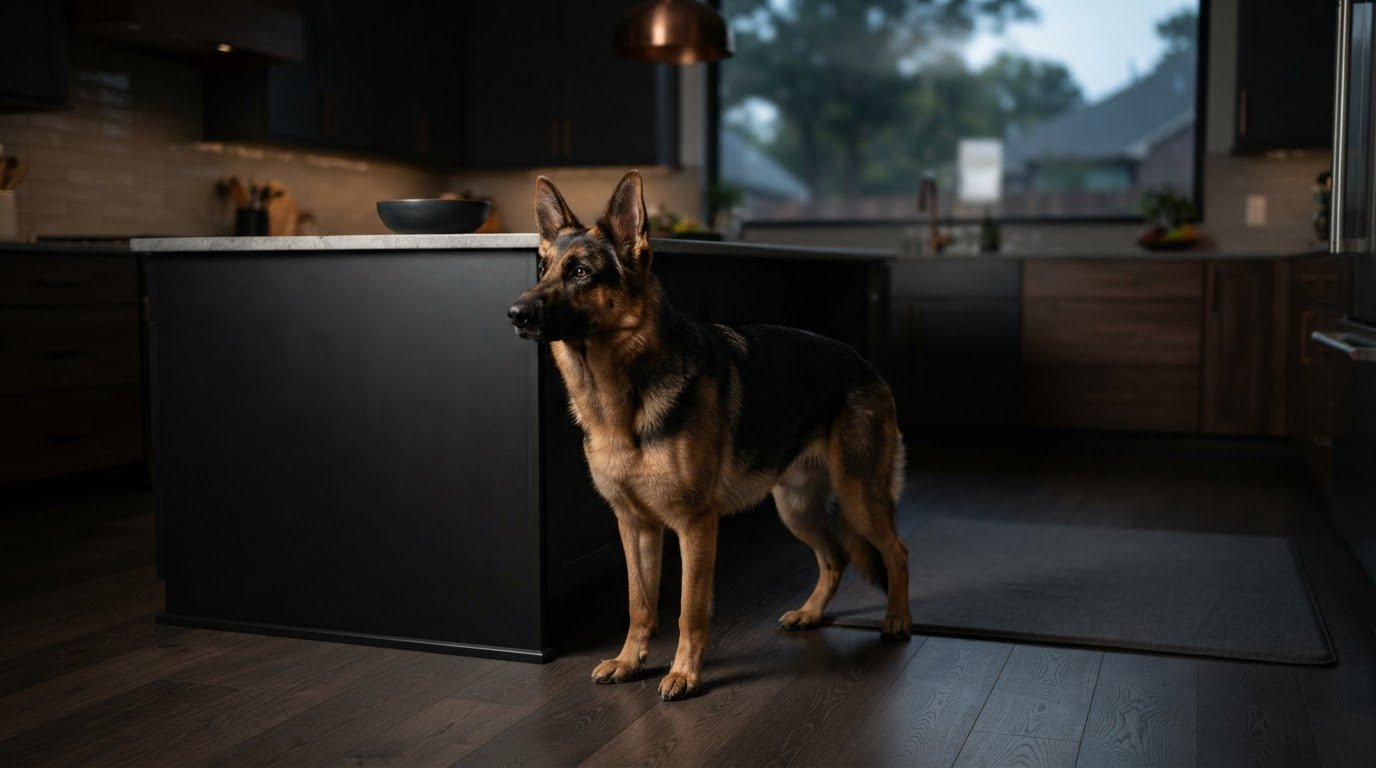
Settling is equally practical. Reinforce your dog for resting on a mat or in a designated space while household activity continues. Start when the room is quiet, then practise during ordinary moments such as preparing a meal or welcoming a visitor. A reliable settle gives the dog a clear alternative to pacing, crowding guests, or demanding attention.
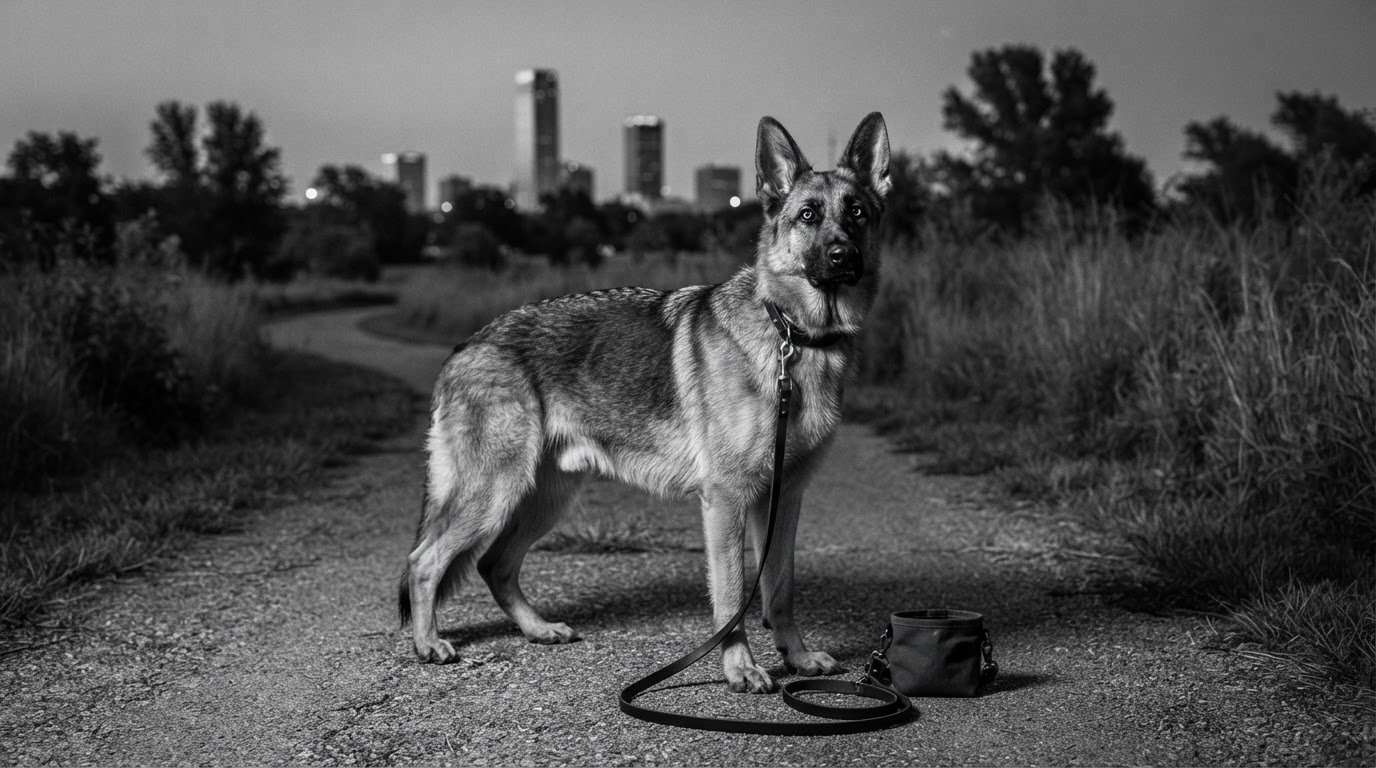
A drag leash is “a leash used to guide a dog away from a resource without reaching into its personal space, enhancing safety.” Use a leash only with attentive supervision, and choose practice setups that let you guide the dog without creating tension or risk.
How should owners practise without overwhelming the dog?
Keep each practice period short and focused on one skill. Begin in a familiar, low-distraction setting, such as a quiet room or yard. End after a few calm repetitions rather than continuing until the dog disengages. Mark the response consistently and provide reinforcement promptly, so the dog can connect the action with the outcome.
Build difficulty one step at a time. Add a mild distraction, increase duration, or practise in a new familiar area, but avoid changing several conditions at once. If the dog stops responding, returns to pulling, or appears distressed, reduce the challenge and return to an easier version. This is useful information about the current training threshold, not a reason to push harder.
Flooding occurs when a reactive dog is overwhelmed by too many stimuli at once, which can lead to shutdown or escalation. Don’t force prolonged exposure to a difficult situation as a shortcut. A measured, science-based obedience training approach helps owners set manageable practice conditions and adjust the plan to the dog’s response.
In-Home or Group Obedience Training: Which Fits Your Large Dog?
The right training setting matches the skill your dog needs to practise. In-home sessions let you work on behaviors in familiar surroundings, while group classes provide a planned opportunity to practise around other dogs and people. A large dog does not automatically need harsher handling. Size calls for thoughtful management, clear communication, and a balanced structure suited to the individual dog.
In-home training focuses on the dog’s routines and environment, making it useful when challenges occur at home or near the property.
Group classes offer practice in a shared training setting, giving owners an opportunity to work on obedience around manageable distractions.
Choosing a starting point depends on the behavior, the dog’s response to nearby dogs and people, and where you need skills to transfer.
When can in-home training be the practical starting point?
An in-home assessment lets a trainer observe the dog’s behavior in context: how the dog responds at the door, moves through familiar spaces, or reacts to activity outside. This home field advantage can help identify behavioral triggers where they actually occur and shape practice around your daily routine.
Some behaviors may not appear in a training center. A dog might remain composed in a new setting yet bark at the front window or rush toward the door at home. The facility effect describes a dog behaving well in a training center but reverting to chaotic behavior after returning home. Practising in the real environment helps address that gap directly.
For obedience training for large dogs OKC, an in-home format can be a sensible first step when the main concern is tied to a specific room, doorway, household routine, or nearby walking route. It also lets you practise handling skills in the same context where you will use them.
When can group classes support obedience practice?
Group classes suit dogs ready to practise familiar cues while other dogs and people are present at a manageable distance. You can maintain communication amid added activity as your dog practises responding in a setting that differs from home. K9Elite offers group classes for owners seeking this kind of structured obedience practice.
A group setting is not the right starting point for every behavioral need. If your dog reacts intensely around other dogs, or you cannot safely maintain distance and focus, an individual assessment may be a better first step. The goal is not to push a dog into the busiest environment. Choose a setting where the dog can learn and you can practise with control.
Choose based on the mission: address home-specific behavior at home, or build obedience around shared distractions in a group. Some dogs may benefit from both settings as skills develop, with the same cues and expectations applied across environments.
A Safe, Consistent Obedience Practice Plan for Home and Walks
A useful practice plan defines what success looks like before the session begins. Set one observable target, such as your dog keeping a loose leash between two landmarks or remaining on a mat while you prepare the dog’s meal. A clear target makes progress easier to recognize and helps you decide what to practise next. For obedience training for large dogs OKC, household members should follow the same plan so the dog receives consistent direction.
How can owners build a repeatable practice routine?
Use this sequence to organize practice and keep each person’s role clear:
Select one behavior and its finish point. Decide what the dog will do and how you’ll know the repetition is complete.
Set a consistent household cue. Agree on the word or signal, who will give it, and what response follows. Avoid having several people call the dog at once.
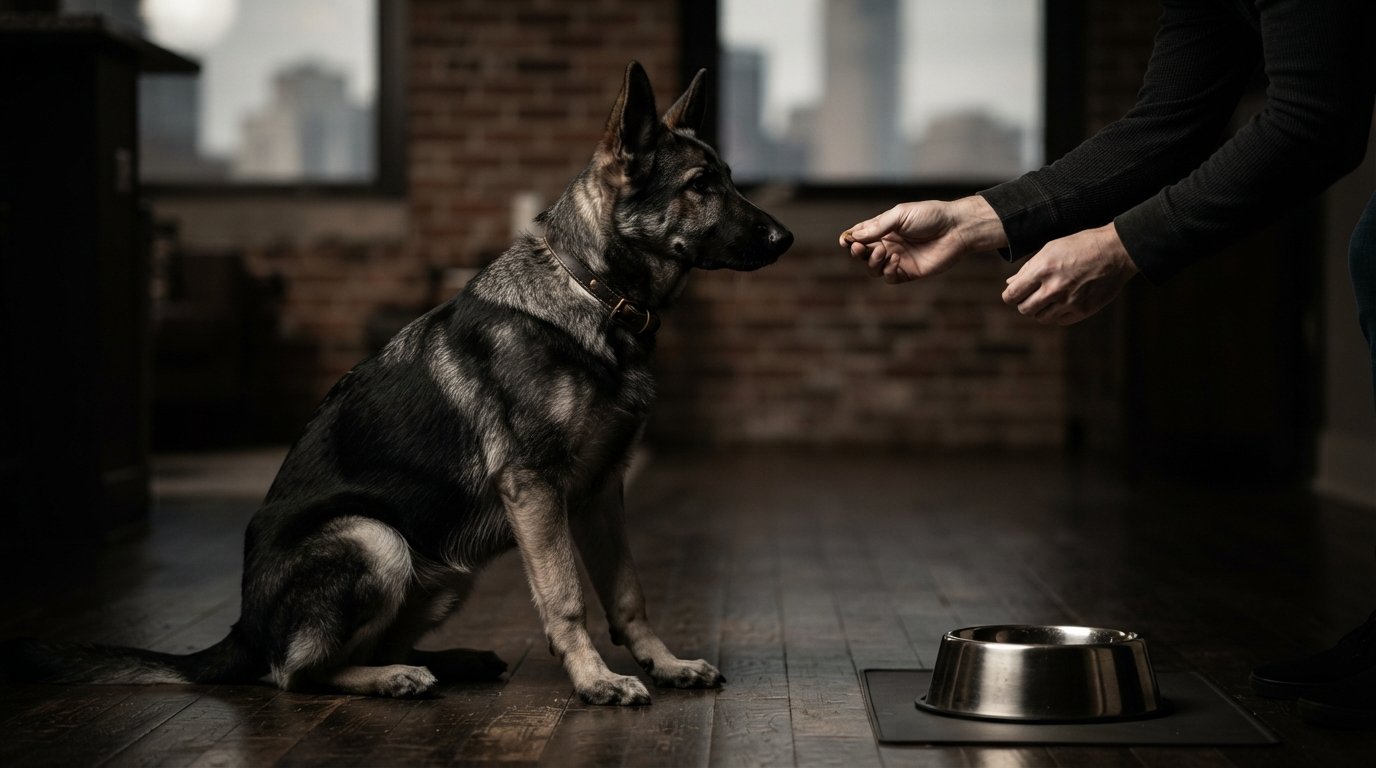
Prepare the reinforcement before starting. Keep the reward accessible so you can mark the response promptly, rather than searching for it while the dog waits.
Record the result of each practice period. Note which cue you used, whether the dog responded, and what helped the response succeed. Use the record to adjust the next session’s goal.
Close with a familiar routine. End with an activity your dog already understands, such as going to a resting area, so the session has a calm, predictable finish.
On walks, plan the route before leaving. Choose a destination with space to pause, and decide how you’ll redirect the walk if the path becomes too busy. Keep your attention on the dog and surroundings, especially near driveways, gates, and other places where a sudden movement could create a handling challenge. Preparation gives you a defined response instead of requiring a rushed decision.
What tools can support safe, balanced handling?
Equipment should fit the dog, the training objective, and your ability to handle it. A drag leash may be part of a trainer-guided plan, but it does not teach the dog what behavior is expected on its own. K9Elite can demonstrate its intended use and help determine whether it suits the situation.
Muzzle conditioning may also be appropriate for a dog’s needs. Build the dog’s comfort with the muzzle through positive, incremental introductions, and get professional guidance if the dog shows distress or a safety concern is present. Tools support a plan; they don’t replace assessment, owner skill, or consistent training.
For help setting a safe practice plan for your dog, learn about K9Elite’s in-home obedience evaluation.
How K9Elite Builds an Obedience Mission Plan for Large Dogs in OKC
Choosing between in-home work and group practice is only the first decision. The next step is a plan that accounts for your dog’s behaviors, the settings where they occur, and your ability to guide practice consistently. K9Elite’s approach is veteran-led, science-based, and balanced, with a focus on clear communication rather than one-size-fits-all commands. Founded by Marine Corps veteran Coty Cortez, K9Elite brings over 15 years of hands-on training experience to obedience training for large dogs OKC.
The process begins with a professional evaluation in the dog’s home environment. The trainer observes behavior, behavioral triggers, communication between dog and owner, and the surroundings that shape daily routines. This context helps distinguish a skill that needs more practice from a behavior that calls for a different training priority. The ANCHOR System brings together accountability, leash navigation, communication, emotional harmony, owner education, and relationship-building to guide the work.
What happens after the professional evaluation?
Evaluation findings inform a customized mission plan based on the dog’s needs and your goals. The plan sets priorities and gives you a clear structure for practising between sessions. A mission‑driven structure organizes sessions into briefing, assessment, active work, and debrief, so you understand the objective, see how your dog responds, and leave with direction for continued practice.
Standard programs last 8-12 weeks. That timeframe provides a working structure for training, not a promise of a particular result. Progress depends on the dog’s needs and the consistency of practice. The OKC in-home evaluation guide explains how an assessment at home can set the direction for training.
How does owner support continue after training?
Training is not only about what the dog learns during a session. You need to understand how to deliver cues, respond consistently, and practise skills in the situations that matter at home. Owner education makes those steps part of the plan, helping the household maintain clear expectations as routines change.
Lifetime support means ongoing assistance and resources after training sessions conclude. It gives owners a way to seek guidance as they continue practising and managing everyday situations with their dog. The mission is long-term communication between owner and dog, not a short burst of commands without follow-through.
For a starting point tailored to your dog and home environment, view K9Elite’s in-home evaluation.
Set a Clear Training Mission for What Comes Next
Turn one daily challenge into a focused training objective. Choose the moment that matters most, then build a plan around the environment, your dog’s response, and the communication you want to establish. That gives practice a clear purpose and helps you make steady decisions rather than reacting in the moment.
For owners considering obedience training for large dogs OKC, an in-home evaluation connects training goals to the dog’s real routines. K9Elite provides in-home services across Oklahoma City, Edmond, Moore, Norman, and Midwest City, with guidance tailored to the dog and household.
Start with a clear assessment, then follow a mission plan you can put into practice. Schedule an in-home evaluation with K9Elite to identify your next training steps and build more consistent everyday communication.
Frequently Asked Questions
Can an older large dog still learn obedience?
Yes, an older dog can learn new behaviors, though the training plan should account for the dog’s health, history, and established routines. Start with a skill that makes daily life easier, such as pausing before getting out of the car. Keep practice comfortable and reinforce small steps toward the goal. If a behavior has changed suddenly, consult a veterinarian to check for health factors before treating it as a training issue.
Is obedience training different for large-breed dogs?
The core learning principles are not determined by breed size, but handling plans should account for a dog’s strength and your ability to guide safely. For obedience training for large dogs OKC, practise leash skills with equipment and spacing that let you remain in control without straining. Consider the individual dog’s confidence, energy, and behavior around people or dogs. Size alone does not establish temperament or define the training plan.
How do I stop my large dog from pulling on the leash?
Teach the dog that a loose leash keeps the walk moving. Begin where distractions are limited, reinforce the dog for walking near you, and pause or change direction calmly when the leash tightens. Avoid adding distance or busier surroundings until the dog can respond in the current setting. If pulling is paired with lunging, fear, or aggression, seek an individual assessment instead of relying on leash practice alone.
Can a large dog learn to stay calm around visitors?
Yes. Start by arranging a low-pressure visitor routine rather than expecting the dog to greet people at the door. Use a barrier or a separate area if needed, and reinforce calm behavior before increasing the challenge. Ask visitors to give the dog space and follow your instructions. If the dog has growled, snapped, or shown intense fear, get professional guidance before attempting close introductions.
Should I choose private training or group classes for my large dog?
Choose private training when the main challenge happens in a specific home routine or requires individualized attention. Group classes can help a dog practise known skills with other dogs and people nearby, provided the dog can remain engaged at a manageable distance. Some owners use both formats for different goals. In Oklahoma City, start with the setting that allows safe practice and gives you the clearest feedback on your dog’s response.
Is muzzle conditioning appropriate during obedience training?
Muzzle conditioning may be appropriate when a dog’s needs call for an added safety measure, but introduce it gradually and positively. Let the dog investigate the muzzle and build comfort in small steps. Don’t force it onto a worried dog or use it as punishment. A muzzle does not replace supervision, distance, or behavior guidance. K9Elite can help determine whether conditioning fits the dog’s situation.
How long does obedience training for a large dog usually take?
There is no single timeline for every dog. The pace depends on the skills being taught, how long the behavior has been practised, the dog’s response to distractions, and how consistently the household follows the training plan. An evaluation can help set priorities and outline a reasonable program. Keep practising after formal sessions, since everyday routines are where learned skills need to remain useful.
Comments