
Professional Dog Obedience Training in Oklahoma City: A Structured Path to Reliable Skills
What good is a sit, stay, or heel if it disappears the moment your dog encounters a distraction? Inconsistent responses can make home routines and Oklahoma City walks feel unpredictable, especially when you’re unsure how to set clear expectations without harsh methods. Professional dog obedience training Oklahoma City owners can apply in daily life starts with more than teaching commands. It builds reliable communication through structure, repetition, and practice in the places where behavior matters.
You’ll learn how professional obedience training can strengthen everyday skills, clarify your role, and help your dog respond more consistently around real-world distractions. Progress depends on both the training plan and your follow-through. Practice at home and on familiar routes helps connect session work to daily routines, rather than leaving skills confined to a training setting.
This article explains what a structured approach involves, why training in your dog’s home environment can reveal useful triggers and routines, and how owner-led practice supports lasting progress. The mission is practical: clearer communication, dependable everyday obedience, and a plan that fits life in Oklahoma City.
Table of Contents
What Professional Dog Obedience Training in Oklahoma City Should Help You Achieve
Professional dog obedience training Oklahoma City owners rely on should create a shared system of communication, not just a list of commands. Structured instruction helps a dog understand what a cue means and gives the owner a consistent way to guide the response during everyday routines. That can include waiting at a doorway, walking with less pulling, greeting people without jumping, or responding to a familiar cue when activity picks up.
Reliable obedience is a skill your dog can maintain across people, places, and situations. The goal is practical follow-through, built through clear expectations and purposeful practice. Training principles vary, and this overview of dog training methods and principles offers background on the subject. A trainer’s role is to turn useful principles into a plan that fits the dog and the owner’s daily life.
Recognizing the gap between knowing a cue and following it
A dog may respond to “come” in a quiet room yet hesitate when a visitor arrives or a nearby dog draws attention. The cue may be familiar, but the setting, competing activity, and amount of practice have changed. That gap isn’t a reason to blame the dog or owner. It’s information for adjusting the plan and building the skill step by step. Behavioral triggers are specific situations or stimuli that prompt an unwanted response, such as barking when a person approaches or pulling when another dog comes into view.
Setting practical obedience goals for Oklahoma City life
Start with a situation, not a broad label like “needs better manners.” Describe what you see, where it happens, and what response you want instead. Choose one priority at a time, then track whether the behavior becomes more consistent in that setting. Specific goals help an owner and trainer determine whether the next step is basic obedience practice or a closer look at a behavioral concern.
At home: wait calmly before going through a doorway.
On walks: move on a looser leash past a familiar distraction.
During daily routines: respond to a cue before meals or when guests arrive.
If a dog shows aggression, intense fear, or reactivity that creates safety concerns, commands alone may not address the underlying issue. A behavioral assessment can help identify the dog’s responses, context, and triggers before setting priorities. Obedience training may still support the plan, but behavior modification calls for goals suited to the specific concern. Clear assessment keeps the mission focused on the right work instead of treating every difficult moment as a failure to obey.
How K9Elite Builds Obedience Through Balanced, Science-Based Structure
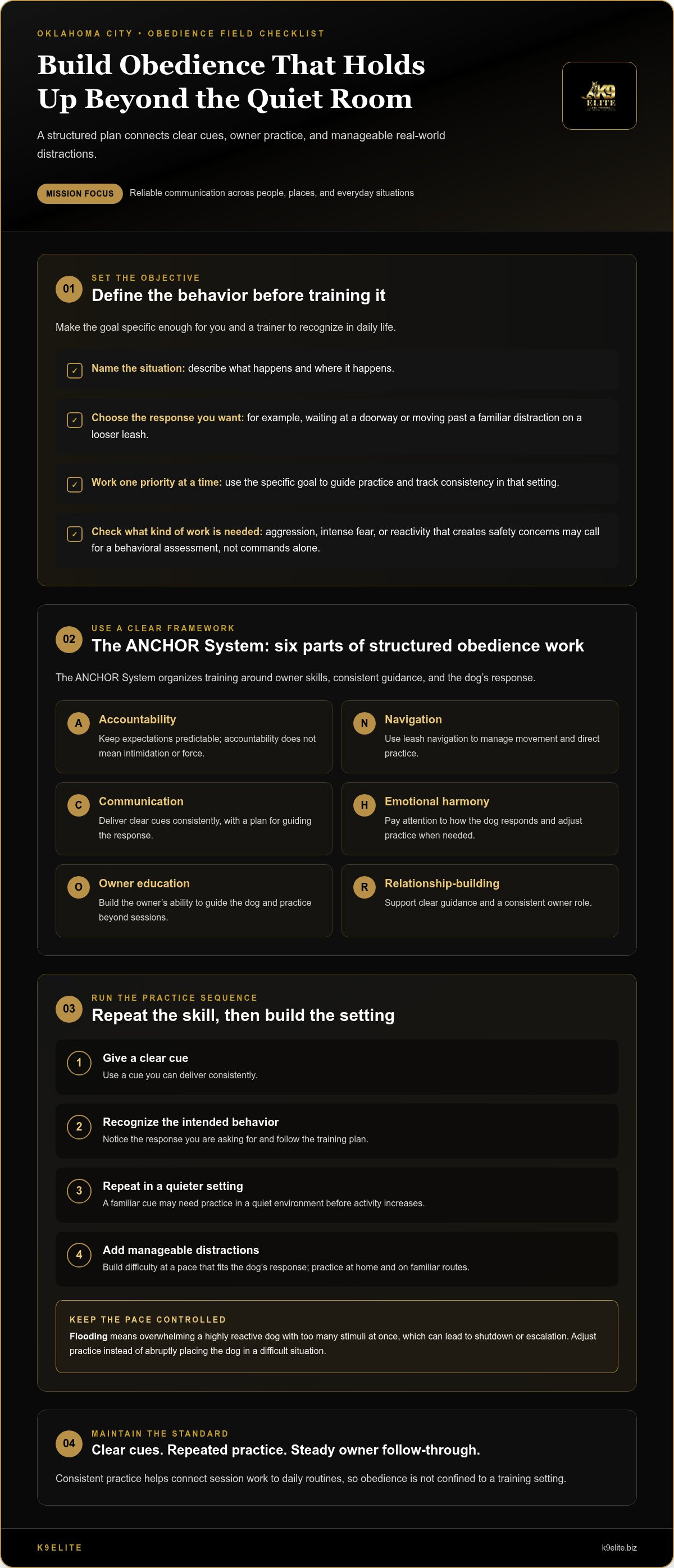
Reliable training needs a clear framework. K9Elite’s ANCHOR System organizes obedience work around accountability, leash navigation, communication, emotional harmony, owner education, and relationship-building. The aim is to give the owner practical skills for guiding the dog, then build consistent practice around the dog’s needs. For a broader look at training guidance and resources, the AKC’s guide to dog training offers useful background.
What the ANCHOR System contributes to obedience work
Clear communication starts with cues the owner can deliver consistently and a plan for guiding the dog’s response. Leash navigation helps the owner manage movement and direct practice, while accountability means keeping expectations predictable. It does not mean intimidation or force. Owner education matters because a skill must be understood and practiced beyond the training session. Relationship-building supports that work by making guidance clear and the owner’s role consistent.
Balanced, science-based training pairs structure with attention to how the dog responds. The owner gives a clear cue, recognizes the intended behavior, and follows the training plan consistently. If the dog is confused or struggling, adjust the practice rather than assuming defiance. Measured guidance makes the work understandable for both dog and owner. It also keeps obedience practice focused on communication instead of escalating pressure.
Why consistency matters more than a quick fix
Dogs learn through repeated experiences. Consistent cues and owner practice help a dog understand which response is expected across different settings. Clear cues, repeated practice, and steady owner follow-through help a dog carry learning from one setting into another. A new skill may need to be practiced in a quiet environment before the owner asks for the same response amid more activity.
Pacing is part of the plan. Flooding is a training pitfall in which a highly reactive dog is overwhelmed by too many stimuli at once, potentially leading to shutdown or escalation. Instead of abruptly placing a dog in a difficult situation, shape practice around the dog’s response and build difficulty at a manageable pace. Progress depends on appropriate practice and the dog’s specific needs, not a fixed timetable.
K9Elite uses a mission-driven structure to keep sessions purposeful: briefing, assessment, active work, and debrief. The briefing sets the objective; assessment helps identify the starting point; active work gives the owner and dog focused practice; and the debrief clarifies what to continue between sessions. That sequence connects instruction with owner participation. To explore how this structured approach could fit your dog, learn about K9Elite’s training approach.
Private or Group Obedience Training in Oklahoma City?
The right training format depends on the skill your dog needs to practice and the situations you want to address. K9Elite provides private in-home obedience training across the greater Oklahoma City metropolitan area, including Edmond, Moore, Norman, and Midwest City. Group classes offer another practice setting when a dog is ready to work around other people and dogs. Both formats put the owner’s participation at the center of the mission.
When private in-home obedience training may fit best
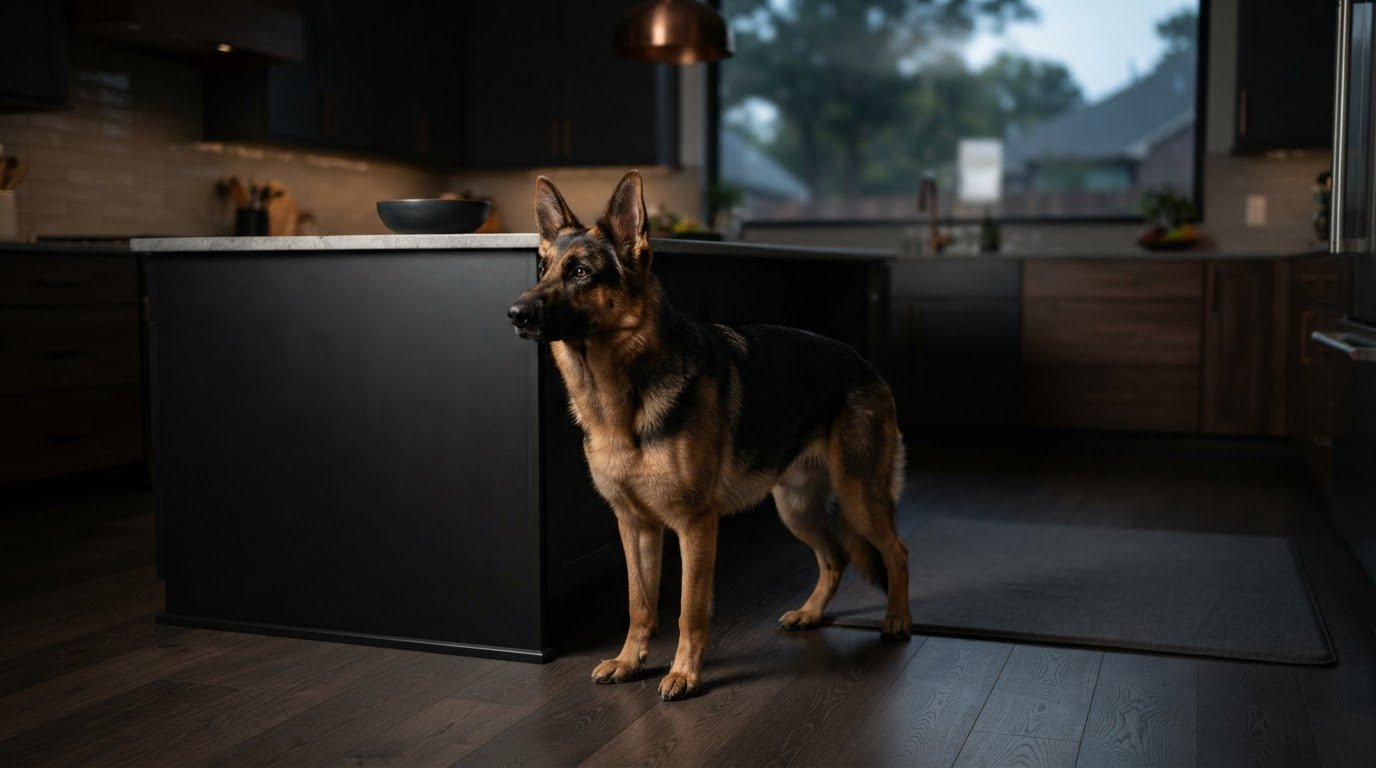
Home field advantage means the trainer can observe the dog in its own environment, where routines and situation-specific behavioral triggers are visible. A greeting at the front door, movement through a hallway, or leash preparation before a walk can reveal exactly where guidance is needed. One-to-one work can focus on those priority situations, giving the owner a chance to practice the steps in context. This format offers focused instruction, not a guarantee of faster or better results.
Private practice can also clarify what the owner should repeat between sessions. The trainer and owner can work on a selected routine, review the dog’s response, and adjust the next practice step to suit that environment. For professional dog obedience training Oklahoma City families can connect to daily life, training where the routine happens makes those details part of the work. Explore K9Elite's in-home training approach.
When group classes can add useful practice
Group classes give owners and dogs a chance to practice cues while other people and dogs are present. That setting can help extend skills beyond the home, provided the dog is ready for that level of activity. An owner can focus on one task, such as getting the dog’s attention before giving a cue, then follow the instructor’s direction and keep practice manageable. K9Elite offers group classes and runs a limited number each year, making them an additional format to consider when group practice fits the dog’s needs.
Use a simple decision check: identify the situation that needs work, consider whether your dog can focus around other dogs and people, then choose the setting that supports safe, useful practice. Private and group instruction serve different training contexts; one does not automatically replace the other. Professional training organizations such as the Association of Professional Dog Trainers offer resources for understanding professional practice. The practical objective is clear: choose a setting that helps you build consistent skills and carry them into everyday routines.
How to Carry Obedience Training Into Daily Life Around OKC
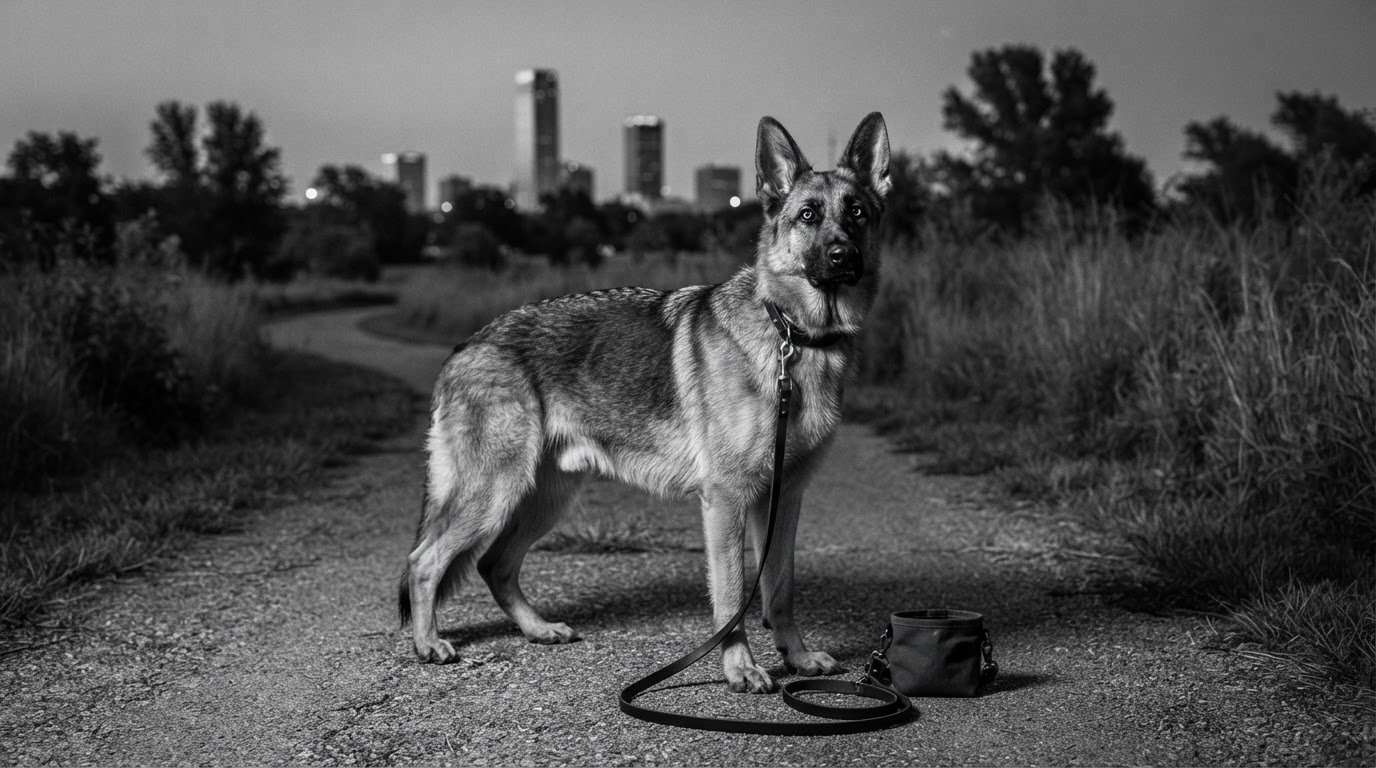
Training becomes useful in daily life when the owner practices skills outside the lesson. A dog may respond well in a training setting but struggle at home, a pattern known as the facility effect. The answer is not to repeat commands louder. Build a clear routine, notice how your dog responds, and adjust the next step so the skill can transfer gradually. For owners working on professional dog obedience training Oklahoma City routines, consistent practice is the mission.
A simple practice sequence owners can repeat
Choose one everyday moment and practice there. Keep each practice brief and focused, then return to the routine. Follow this sequence:
Choose one goal. Select an observable action, such as your dog pausing before crossing the doorway.
Use a clear cue. Give the cue once when your dog can reasonably respond.
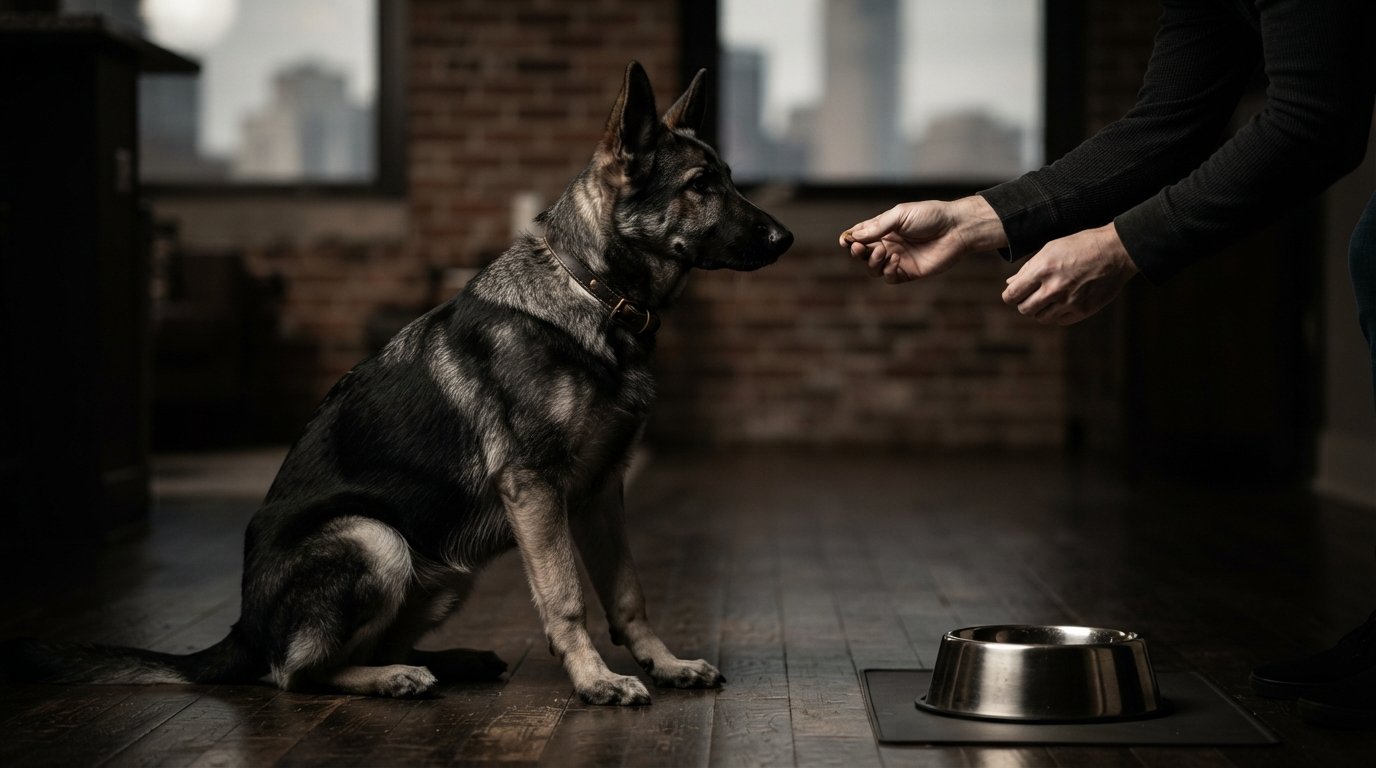
Reward the intended response. Mark the behavior with a reward your dog values when your dog follows through.
Repeat consistently. Practice the same cue and response in that routine before changing the situation.
Build practice into moments that already happen, such as preparing for a walk or settling before a meal. Track the context and response: where you practiced, what was happening nearby, and whether your dog followed the cue. Look for a pattern, not flawless performance. If your dog struggles, simplify the situation or return to an easier step. The guide to mastering dog obedience can help you think through additional obedience skills to practice.
Adjusting practice when behavioral triggers appear
When a behavioral trigger appears, pause and observe before asking for more. Note the situation, the distance from the trigger, and your dog’s response. Those details help you decide whether to create more space, return to a familiar exercise, or end the practice and reset. Adding several challenging stimuli at once can overwhelm a reactive dog. Gradual, manageable steps give the owner a clearer way to guide practice without pushing beyond what the dog can handle.
Aggression needs careful attention, not just more repetitions of an obedience cue. If your dog’s response involves aggression, use an appropriate behavior-modification plan rather than trying to manage the concern through routine obedience practice alone. K9Elite’s aggressive dog rehabilitation guide discusses that distinct training need.
Consistent owner practice helps connect instruction to home routines and walks around Oklahoma City. For guidance that fits your dog’s everyday training needs, start with K9Elite’s obedience training.
Start Professional Dog Obedience Training With K9Elite in Oklahoma City
A reliable training plan starts with understanding the dog in context. Before obedience work begins, a professional evaluation observes the dog, behavioral triggers, and home environment. The trainer can see how the dog responds to familiar cues and routines, while the owner can describe situations that feel difficult. Those observations help identify communication gaps and establish priorities for professional dog obedience training Oklahoma City owners can apply in daily life.
What the evaluation contributes to an obedience plan
The trainer considers the dog’s temperament, responses to specific situations, and the owner’s goals. This helps shape relevant priorities rather than applying the same sequence to every dog. An owner might want to improve leash communication, build a steadier response to cues, or address a challenge that occurs at home. The dog training evaluation guide for OKC explains more about this first step.
Before the evaluation, note what happens before and during a challenging moment, along with the response you’d like to see instead. Share those observations with the trainer. Together, you can use them to set a mission plan around the dog’s needs and your goals. The plan gives each practice step a clear purpose, while your observations can help guide adjustments as training progresses.
After the priorities are set, your role is to practice the agreed skills in appropriate everyday situations. Record where practice is going smoothly and where your dog needs more support. That feedback helps keep the training plan connected to real routines and gives the next session a clear focus.
Building continuity after training sessions
K9Elite provides lifetime support, ongoing assistance and resources after training sessions conclude. Owners remain active in the process by applying the structured approach in daily situations and using that support when questions arise. Continued practice helps keep training aligned with the dog’s needs as routines and contexts vary.
K9Elite is led by Marine Corps veteran Coty Cortez, who brings over 15 years of hands-on training experience. The focus is disciplined, owner-led work that turns evaluation findings into practical next steps.
Start with a clear account of your goals and the situations you want to address. Schedule an in-home evaluation with K9Elite to begin building an obedience plan for your dog.
Put Your Dog’s Next Training Goal Into Action
Reliable skills grow from a clear objective and steady follow-through. Choose one moment in your routine where you want communication to improve, then pay attention to what helps your dog respond. That observation gives you a useful starting point for the next training step. Progress isn’t about demanding perfection; it’s about building a practical pattern that both you and your dog can understand.
With professional dog obedience training Oklahoma City owners can make the work specific to their daily lives. A trainer can help identify the right priorities, shape a plan around your dog, and guide your practice with structure. Your consistency matters, and asking for expert direction is a constructive step when you’re unsure how to proceed.
Set the mission: clearer communication and dependable skills, built through patient, purposeful practice. Arrange your in-home evaluation with K9Elite and take the next step toward a more confident routine with your dog.
Frequently Asked Questions
Can older dogs learn obedience through professional training?
Yes, older dogs can learn new obedience skills, with practice paced to their experience, temperament, and physical comfort. Start with one useful goal, such as waiting calmly while you attach the leash, then practice in a familiar setting. A trainer can help identify which cues the dog already understands and what motivates the dog. Age alone doesn’t determine whether a dog can make progress.
How long does professional dog obedience training take?
The timeline depends on the dog’s needs, your goals, and how consistently you practice between sessions. K9Elite’s standard programs last 8-12 weeks, but that range isn’t a promise that every dog will reach every goal within the same period. Some skills need more practice in different contexts. Follow the trainer’s guidance, keep track of your dog’s responses, and adjust practice as needed.
Does the owner participate in professional dog obedience training?
Yes. Owner participation is essential because your dog needs to respond to you during daily routines, not only to a trainer. You can learn how to give cues clearly, observe your dog’s response, and reinforce the behavior specified in the plan. For example, practice asking your dog to wait before opening the front door, then use the same cue and expectation each time.
Can obedience training help a dog that reacts to other dogs?
Obedience skills can support communication and management, but a strong reaction toward other dogs may call for behavior modification as well. Start by noting what happens, where it occurs, and how your dog responds. Don’t move closer to test your dog’s limits. A trainer can use those observations to help determine whether obedience practice is appropriate or a behavioral assessment should guide the next steps.
Does K9Elite provide professional dog obedience training outside Oklahoma City?
K9Elite provides in-home dog training throughout the greater Oklahoma City metropolitan area, including Edmond, Moore, Norman, and Midwest City. This local service brings training into the dog’s home environment and familiar routines, where the trainer can observe practical skills and behavioral triggers.
Are group obedience classes available through K9Elite?
Yes, K9Elite offers group obedience classes. They give owners a structured setting to work on instruction alongside other class participants, while each owner remains responsible for guiding their own dog. Before class, decide which cue or skill you want to focus on, then follow the instructor’s direction during practice. This helps keep your attention on your dog’s response rather than comparing progress with other teams.
What happens after a K9Elite obedience training program ends?
After the scheduled training program ends, the owner’s practice remains part of the dog’s routine. Keep using the cues and handling strategies covered during training, and note where your dog responds reliably or needs more guidance. If a familiar skill becomes difficult in a new situation, return to a simpler context and rebuild gradually. K9Elite also provides lifetime support after training sessions conclude.
What should I expect from an in-home dog training evaluation?
Expect the trainer to observe your dog in familiar surroundings and ask about the routines you want to improve. Before the evaluation, note which cues your dog knows, where follow-through is difficult, and what happens just before a challenging moment. You can also identify one or two priority goals. Sharing these details gives the trainer a clearer starting point for planning next steps.
Comments